

Contact


Most revenue teams do not struggle with effort. They struggle with friction. As companies grow, sales, marketing, and customer success often share the same CRM but operate with disconnected workflows, definitions, and handoffs. This leads to broken automation, inconsistent data, unreliable forecasts, and revenue decisions made with limited visibility.
That friction increases as the scale increases. Manual processes reappear, lifecycle stages drift, dashboards multiply, and RevOps teams spend more time fixing systems than improving pipeline performance, conversion rates, or retention. Instead of accelerating growth, operations quietly become a bottleneck.
This guide explains how RevOps automation solves these problems. You will learn how automation and AI reduce manual work, align revenue data, and turn insights into action across the entire customer lifecycle.
RevOps automation refers to using software, workflows, and AI to automate how revenue data is captured, updated, and acted on across marketing, sales, and customer success. Instead of relying on manual handoffs and human intervention, RevOps automation ensures that revenue activities respond automatically to real-time customer and pipeline signals.
In practice, RevOps automation sits on top of a shared CRM foundation such as HubSpot or Salesforce. These platforms act as the system of record, while automation keeps lifecycle stages, ownership, fields, and workflows aligned as leads convert, deals progress, and customers move through onboarding, renewal, and expansion.
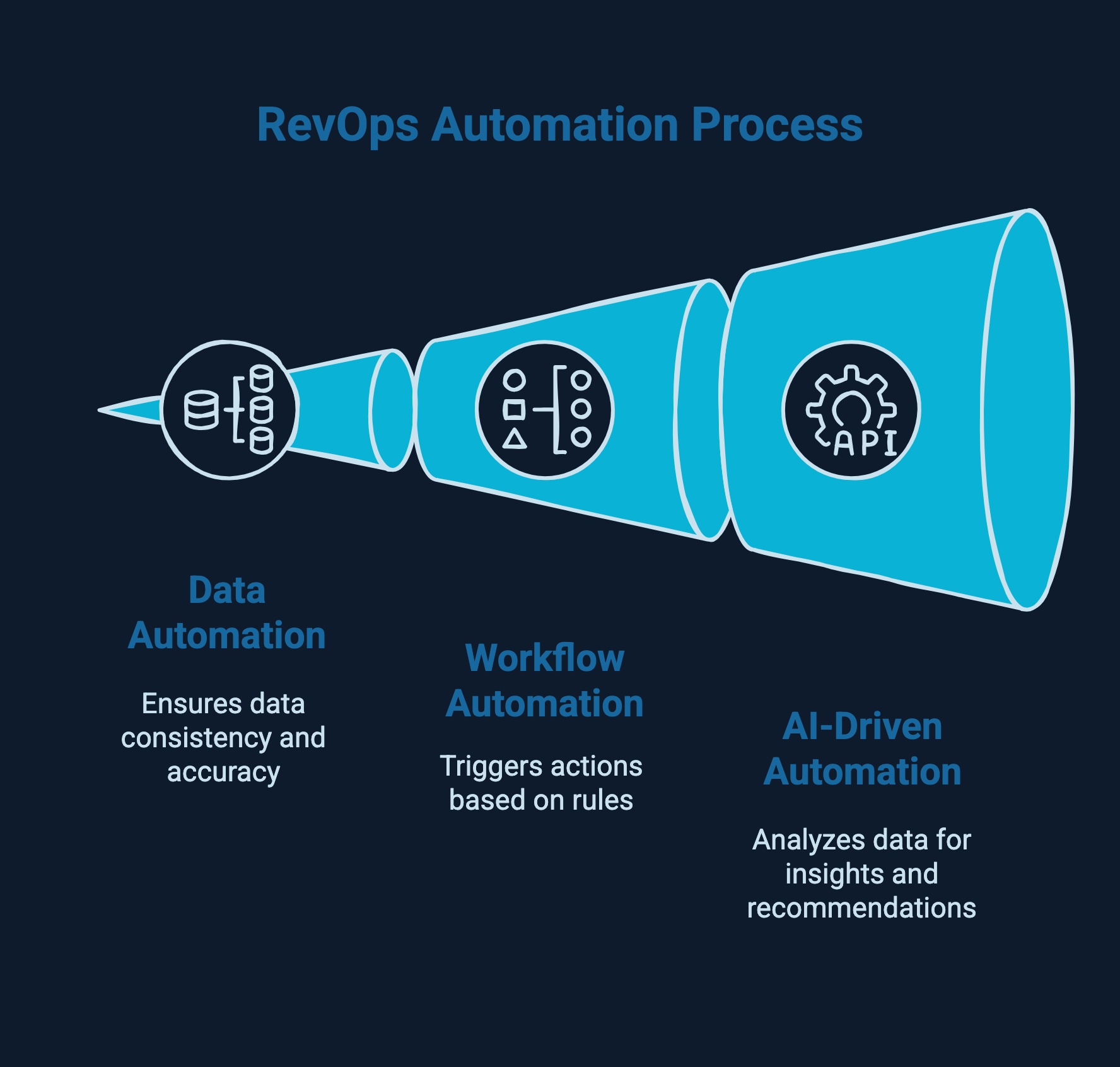
RevOps automation typically works through three core layers:
Together, these layers reduce operational friction and manual effort. More importantly, they ensure every revenue team operates from the same data, follows the same logic, and moves faster without sacrificing accuracy or control.
RevOps data automation focuses specifically on how revenue data is collected, cleaned, enriched, and synchronized across systems. It ensures that customer, account, and pipeline data stays accurate and consistent as it flows between marketing, sales, and customer success tools.
Without data automation, RevOps teams rely on manual updates, spreadsheets, and one-off fixes. This leads to duplicate records, mismatched lifecycle stages, broken attribution, and reports that cannot be trusted. When data is unreliable, automation fails, AI outputs are misleading, and leadership loses confidence in forecasts and dashboards.
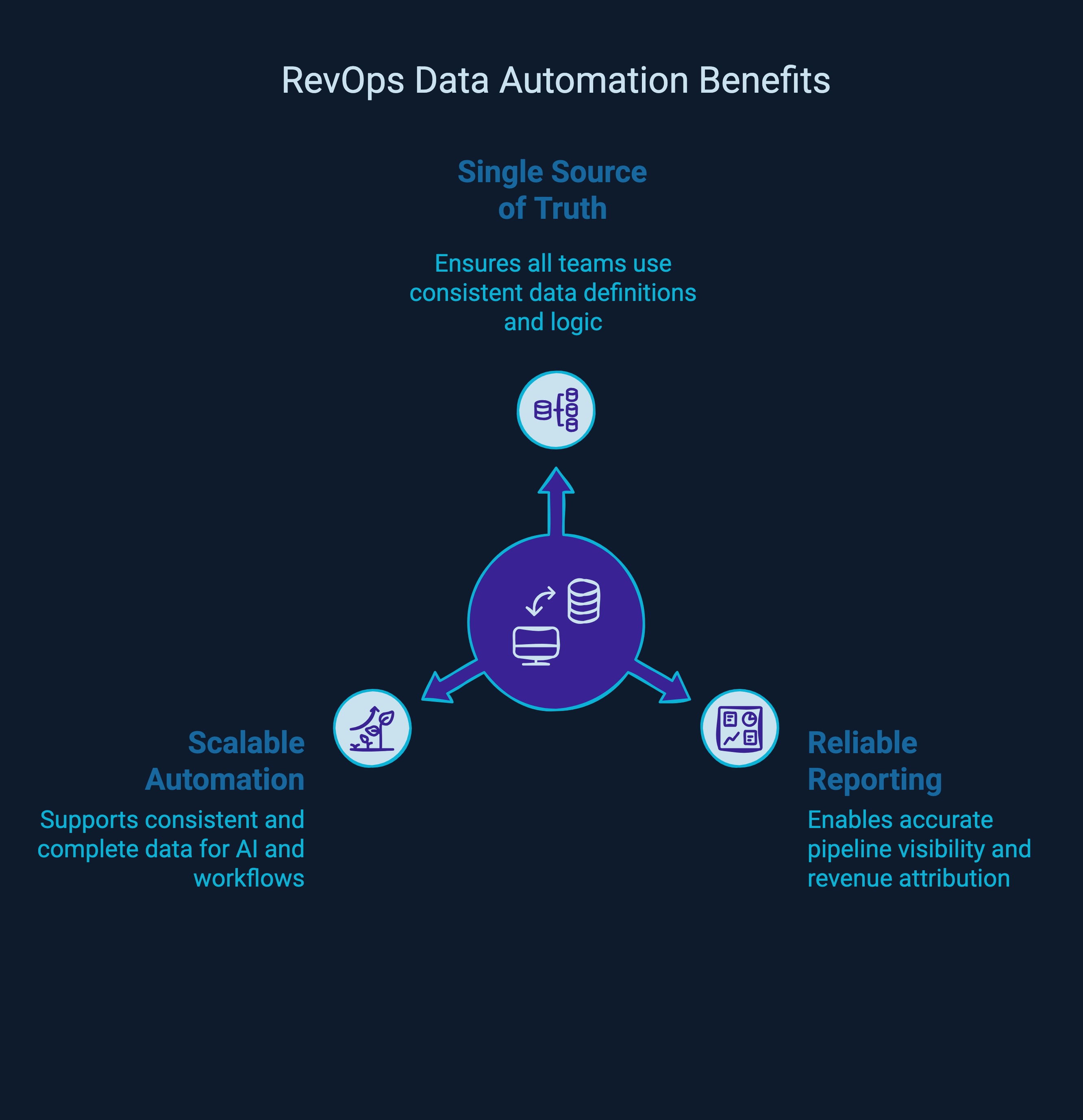
RevOps data automation matters because it lays the foundation for everything else. When data is automated correctly, teams benefit in three critical ways:
In short, RevOps automation cannot succeed without data automation. It is the invisible layer that keeps revenue systems aligned, automation dependable, and decision-making grounded in reality rather than assumptions.
AI automation is shifting RevOps from rules-based execution to insight-driven decision-making. Instead of following static logic, AI analyzes patterns across pipeline and customer data to surface risks, opportunities, and actions that manual processes often miss.
Rather than reacting after performance drops, RevOps teams can act earlier. AI flags at-risk deals, stalled opportunities, forecast gaps, and expansion signals in real time, helping revenue leaders move from firefighting to proactive optimization.
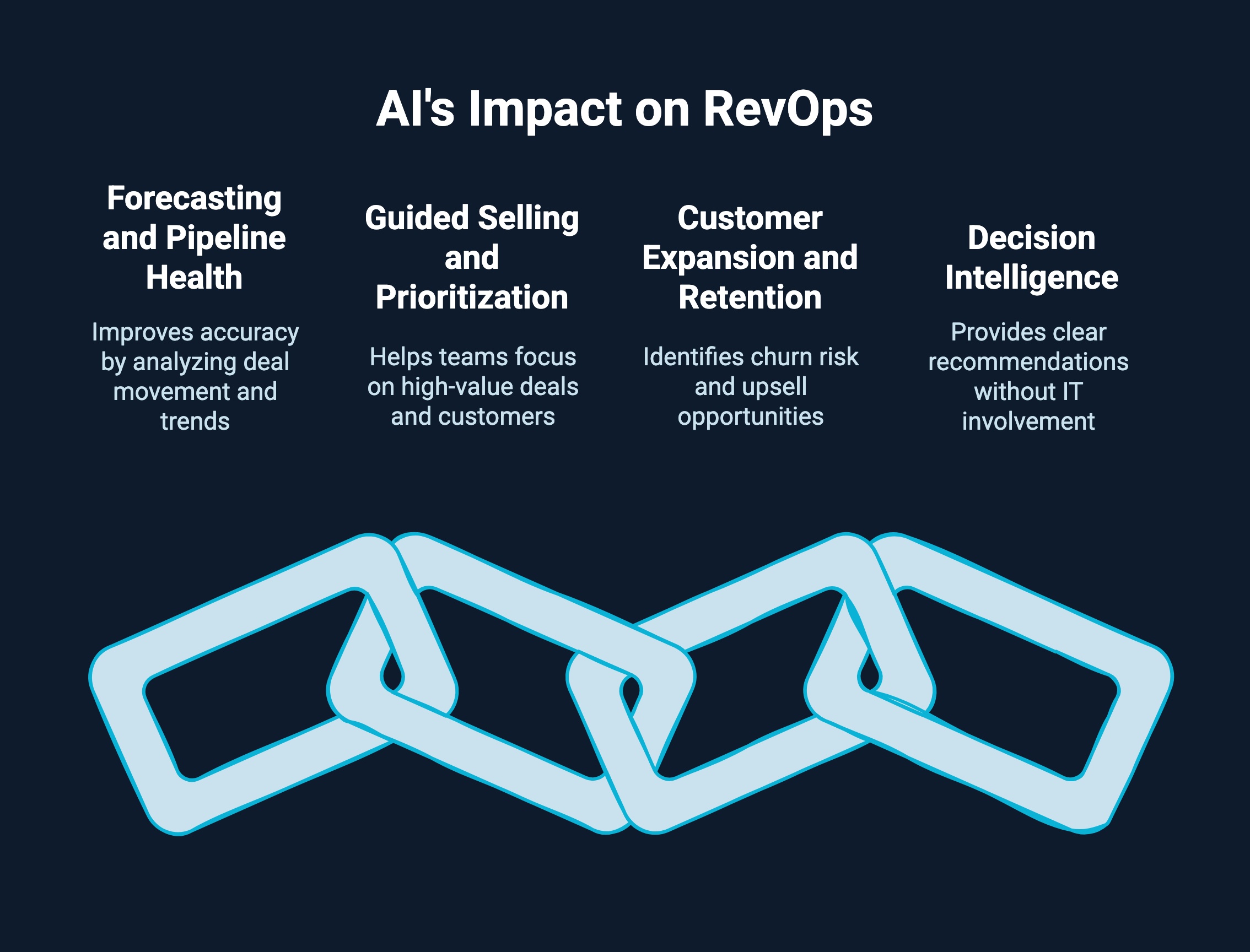
AI automation is changing RevOps in several key areas:
By embedding intelligence directly into revenue workflows, AI automation turns RevOps into a strategic function. Teams spend less time interpreting data and more time acting on it, with confidence that decisions are backed by real signals rather than intuition.
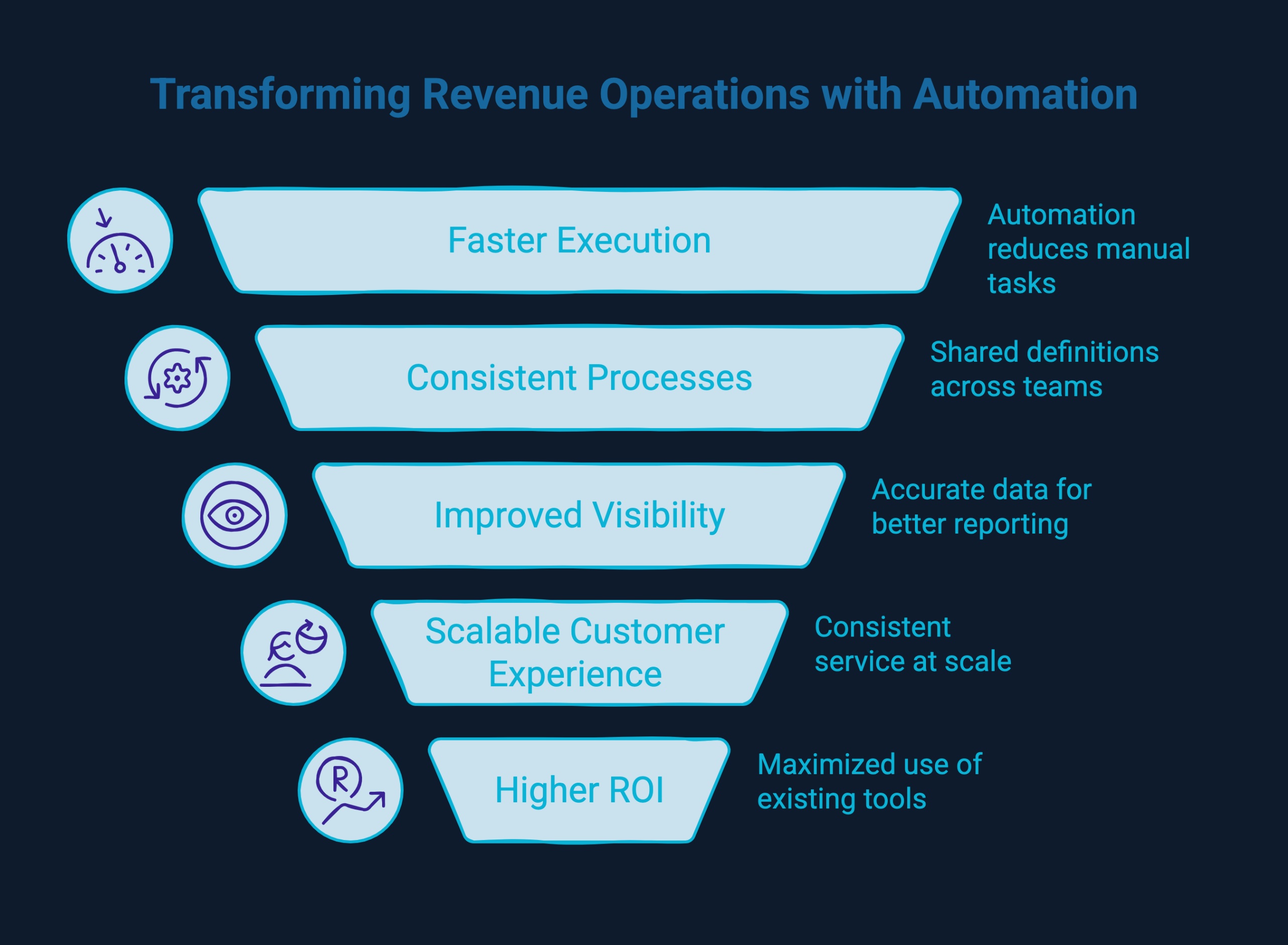
As revenue teams grow, complexity increases faster than headcount. RevOps automation helps teams scale without losing control of processes, data, or customer experience. The core benefits include:
As these benefits compound, teams can grow faster while maintaining speed, accuracy, and operational control.
RevOps automation delivers the most impact when it is applied across the full revenue lifecycle, not isolated within one team. Below are the core use cases where automation consistently drives measurable improvements.
RevOps automation helps marketing teams move beyond lead volume and focus on pipeline quality. Automated lifecycle updates, scoring, and routing ensure sales receive leads at the right time with the right context.
Common marketing-focused use cases include:
When marketing automation is RevOps-aligned, lead handoffs improve, and attribution becomes trustworthy instead of debated.
In sales, RevOps automation reduces friction inside the pipeline and improves execution consistency. Reps no longer need to manually update stages or remember follow-ups, and managers gain clearer visibility into deal health.
Key sales use cases include:
These workflows are commonly orchestrated inside CRMs like HubSpot or Salesforce, ensuring sales execution scales without relying on individual habits.
RevOps automation extends beyond the sale into onboarding, retention, and expansion. Post-sale signals are automated back into the revenue system, creating a closed-loop view of growth.
Core customer success use cases include:
Platforms like Gainsight and Totango automate post-sale signals and feed them back into RevOps planning.
The highest leverage use cases sit between teams. These automations ensure data, ownership, and accountability do not break as customers move across the lifecycle.
Examples include:
When RevOps automation spans all teams, revenue operations stop acting as a support function and start operating as a system that drives alignment, speed, and predictable growth.
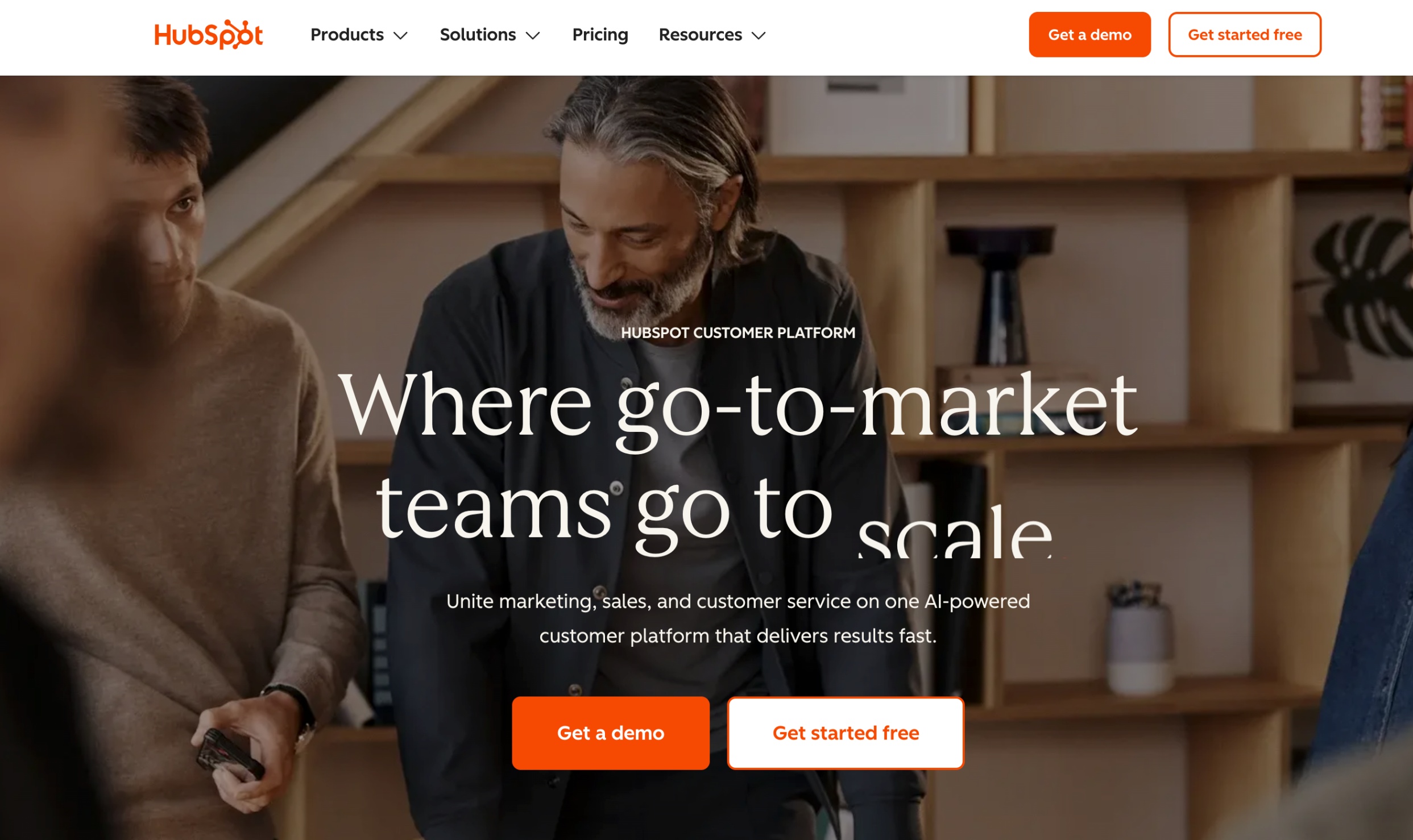
HubSpot is an all-in-one CRM and automation platform that often serves as the backbone of RevOps automation. It unifies marketing, sales, and customer success data in a single system, making it easier to automate lifecycle stages, handoffs, reporting, and revenue workflows without heavy technical overhead.
In RevOps-led organizations, HubSpot typically acts as both the system of record and the primary trigger engine for automation across the entire customer journey.
HubSpot excels when RevOps teams want broad automation coverage with minimal complexity. As organizations grow more complex, it is often complemented with specialized forecasting, integration, or AI tools, but it remains the operational core for many modern revenue teams.
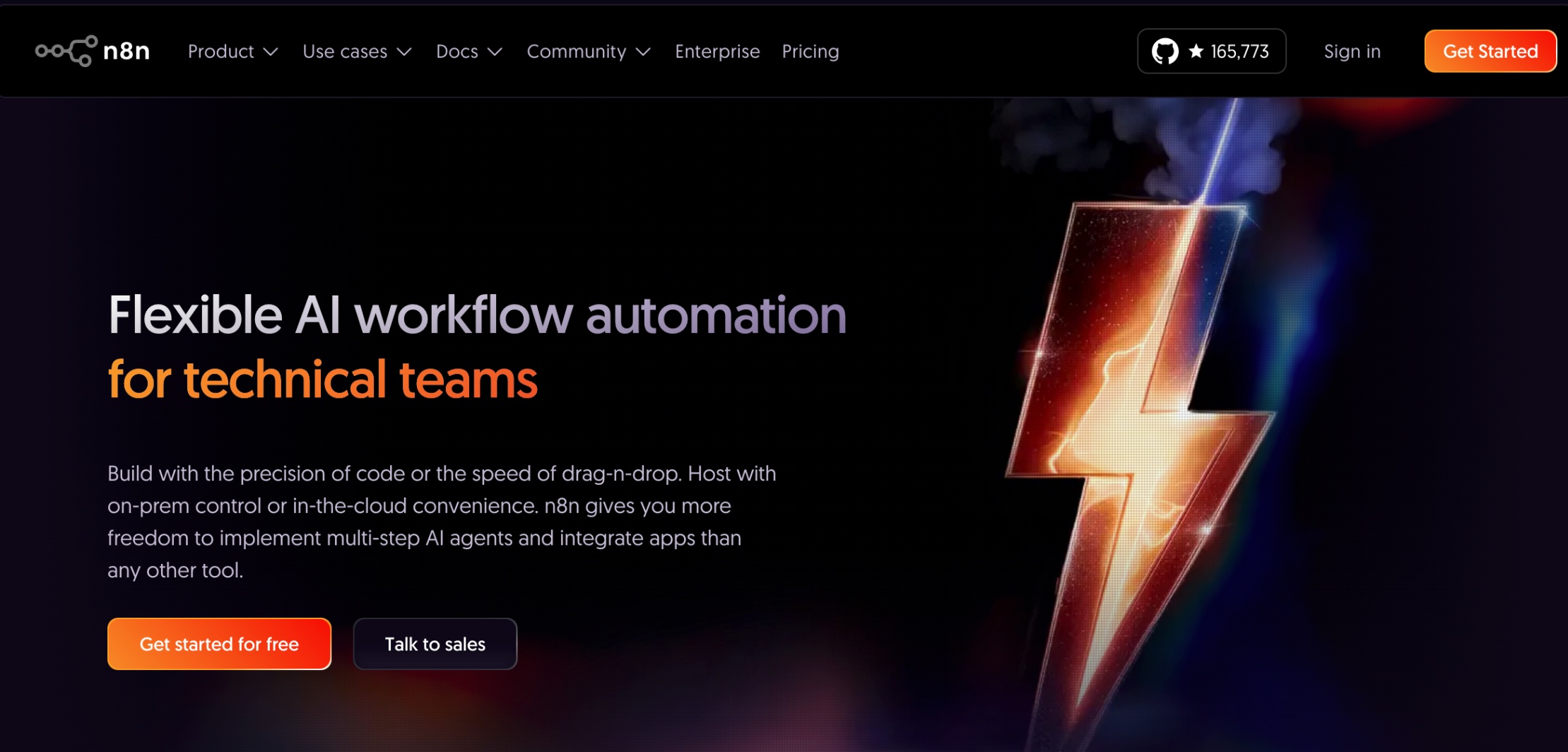
n8n is an open-source workflow automation platform that gives RevOps teams full control over how data and processes move between systems. Unlike no-code tools built for simple triggers, n8n is designed for advanced logic, custom workflows, and complex integrations without locking teams into rigid templates.
In RevOps environments, n8n is often used as a flexible orchestration layer. It sits between CRMs, data tools, product systems, and internal services to automate workflows that are too complex, conditional, or custom for native CRM automation.
n8n excels when flexibility matters more than simplicity. It is often used alongside CRMs like HubSpot or Salesforce to handle edge cases, advanced logic, and cross-system automation that standard RevOps tools cannot support on their own.
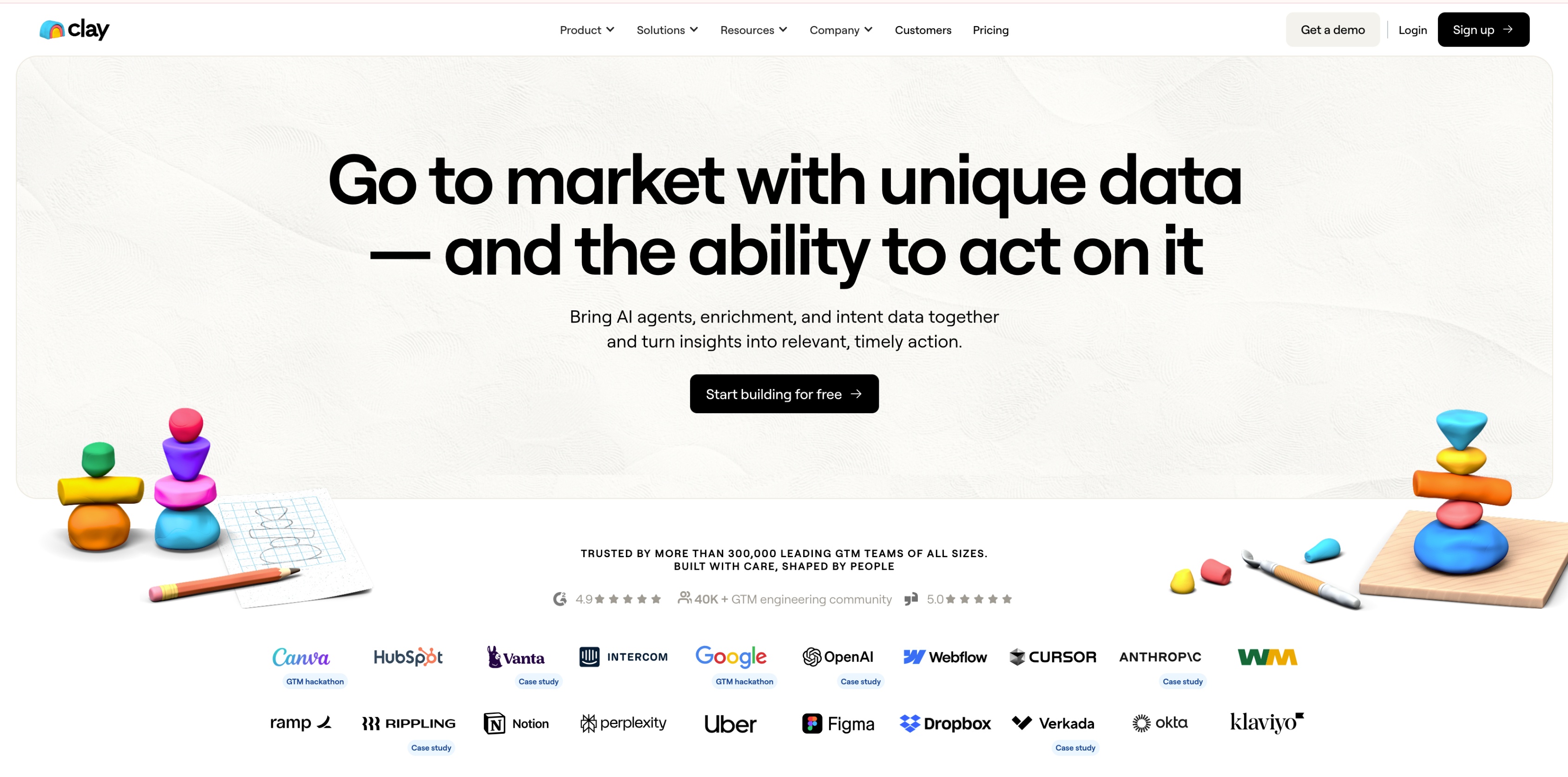
Clay is a revenue data enrichment and automation platform designed to help RevOps, sales, and growth teams turn fragmented data into actionable signals. It combines data enrichment, logic, and workflow automation to support prospecting, segmentation, scoring, and account intelligence at scale.
In RevOps stacks, Clay is commonly used as a data intelligence layer. It enriches CRM records, powers advanced segmentation, and feeds high-quality data into sales, marketing, and outbound automation systems.
Clay excels at turning raw data into usable revenue signals. It is often paired with CRMs and sales engagement tools to improve targeting, prioritization, and automation quality across the RevOps stack.
Zapier is a no-code automation platform that connects RevOps tools when native integrations are missing or insufficient. It enables teams to automate simple, repeatable workflows across apps without engineering support, making it a common utility layer in lean RevOps stacks.
In RevOps environments, Zapier is typically used for quick integrations, lightweight data movement, and operational automation that does not require complex logic or deep customization.
Zapier is most effective for straightforward automation and short time-to-value use cases. As RevOps stacks mature and workflows become more complex or data-heavy, teams often supplement Zapier with more robust orchestration or native automation solutions.
Make (formerly Integromat) is a visual automation and integration platform that allows RevOps teams to design complex, multi-step workflows without writing code. It sits between tools and systems, orchestrating how data moves, transforms, and triggers actions across the revenue stack.
In RevOps environments, Make is often used when workflows are too complex for basic trigger-action tools but do not require full custom engineering. It provides strong control over logic, sequencing, and data handling while remaining accessible to non-developers.
Make strikes a balance between flexibility and usability. It is ideal when RevOps automation requires advanced logic and data handling, but still needs to be built and maintained quickly by operations teams rather than developers.
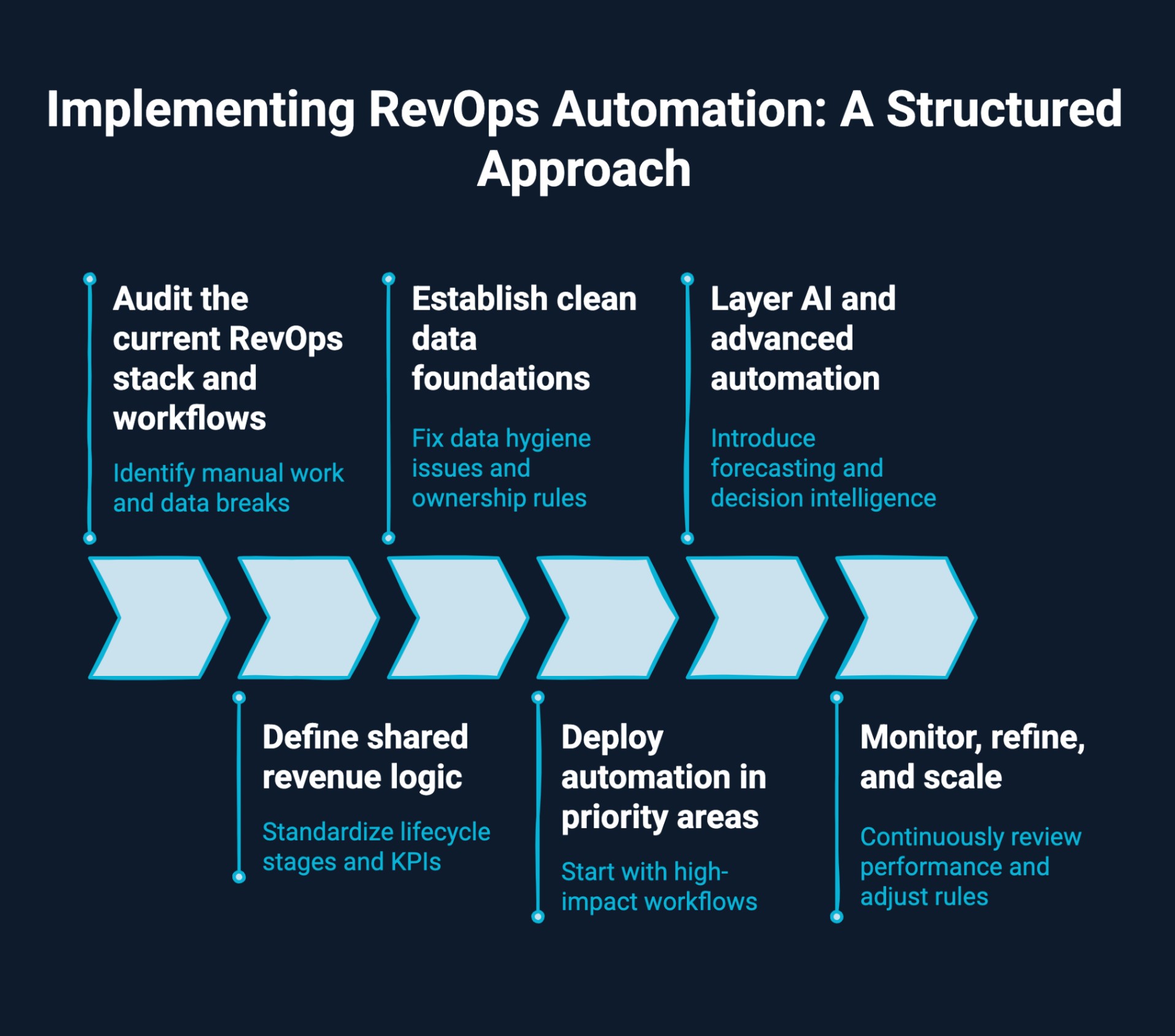
Successful RevOps automation is rarely about tools first. It is about designing the right revenue logic, then applying automation to reinforce it. RevOps agencies and mature in-house teams follow a structured, phased approach to avoid creating brittle workflows or scaling broken processes.
Most implementations start with process and data alignment. Teams document lifecycle stages, ownership rules, handoffs, and success metrics across marketing, sales, and customer success. Only once these definitions are clear do agencies configure CRM automation, data flows, and integrations. This prevents automation from amplifying inconsistencies or bad data.
Implementation typically follows a practical sequence:
RevOps agencies accelerate this process by bringing proven frameworks, tool expertise, and cross-functional experience. Companies that succeed long term treat automation as an operating system, not a one-time project.
AI-powered RevOps solutions help scaling B2B teams move beyond static dashboards and rule-based automation. Instead of only reporting what happened, these platforms analyze patterns across revenue data to predict outcomes, surface risks, and recommend actions before performance slips.
For growing teams, AI becomes essential as deal volume, customer count, and data complexity increase. Manual analysis does not scale, and traditional automation lacks the flexibility to handle nuance. AI-powered RevOps tools solve this by continuously learning from historical and real-time data, guiding smarter decision-making across the entire revenue lifecycle.
AI-powered RevOps solutions typically deliver value in three core ways:
For scaling B2B teams, AI-powered RevOps solutions are not about replacing human judgment. They exist to augment it, helping teams act faster, prioritize better, and maintain control as revenue operations grow more complex.
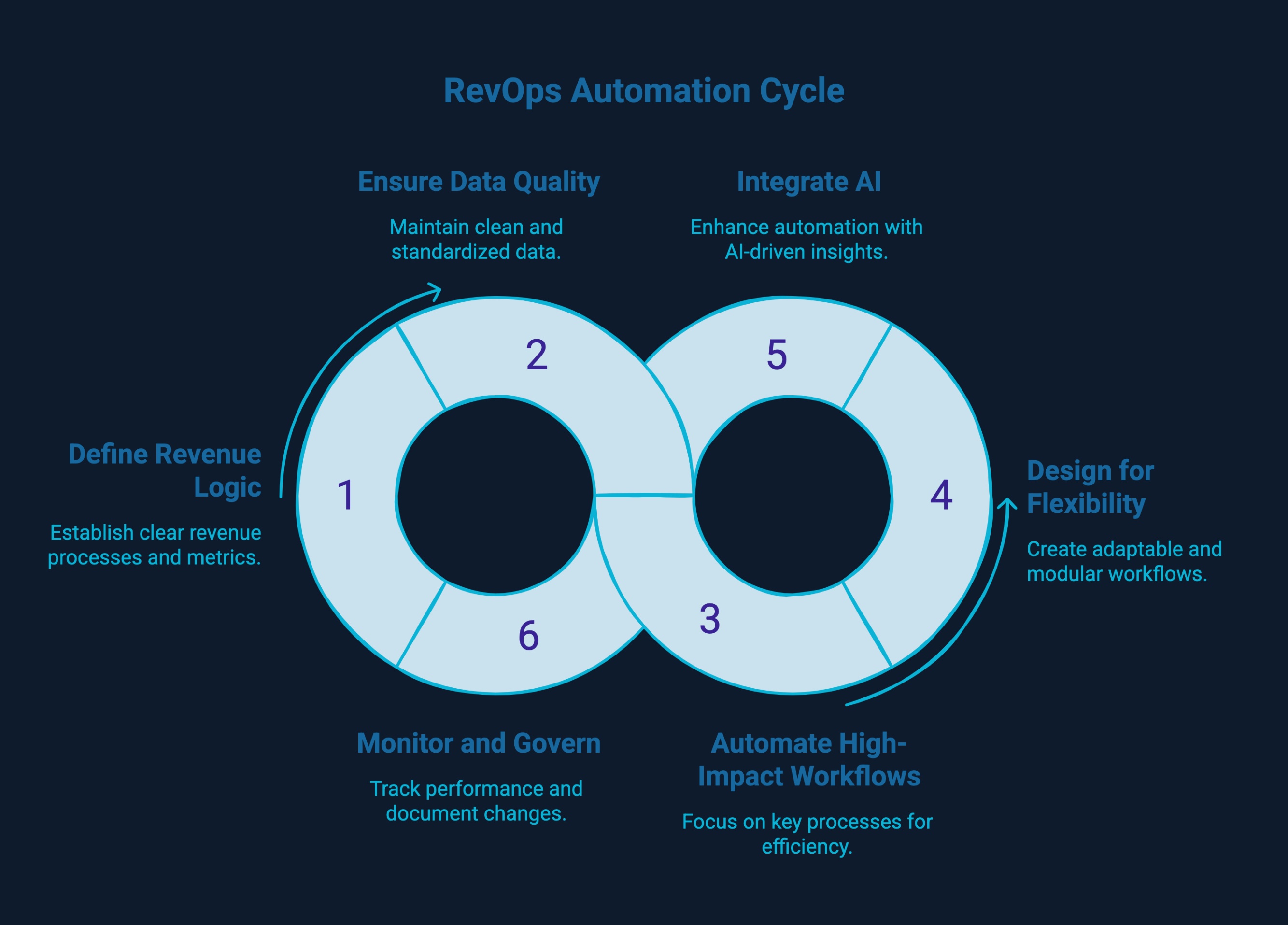
RevOps automation creates long-term value only when it is designed for scale, adaptability, and governance. The following best practices help ensure automation strengthens revenue operations instead of becoming a liability:
Sustainable RevOps automation is treated as a living system. Teams that review and refine it regularly maintain speed, clarity, and control as they scale.
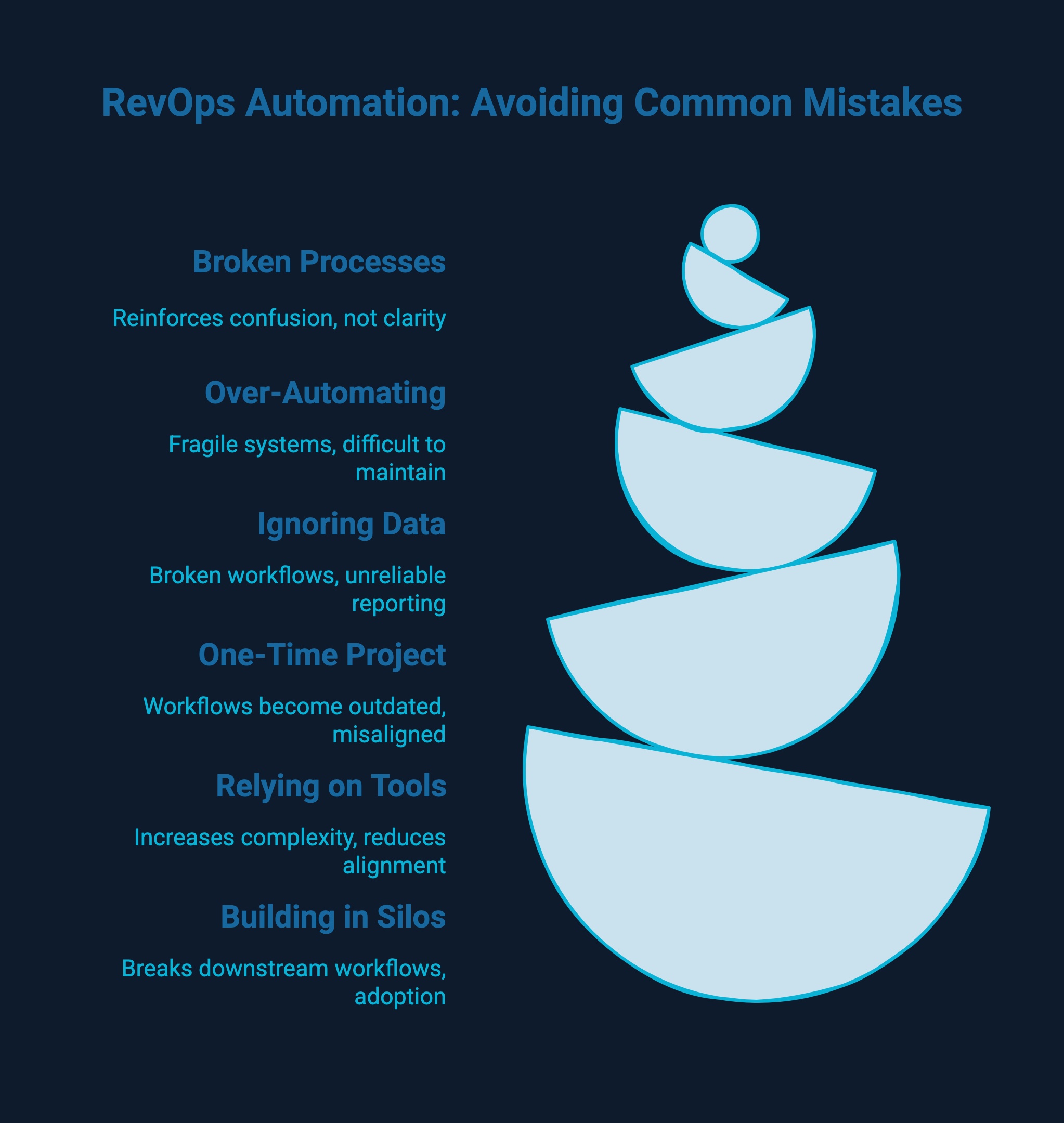
RevOps automation can accelerate growth, but without discipline, it often creates fragility instead of efficiency. The most common pitfalls to avoid include:
When designed intentionally and maintained continuously, RevOps automation becomes a lasting growth advantage rather than an operational risk.
RevOps automation looks very different depending on the company's stage. What works for a 10-person startup often breaks at 100 employees, and automation that enables mid-sized teams is usually unnecessary early on. Understanding how automation evolves by stage helps teams invest in the right workflows at the right time.
Early-stage startups use automation to create consistency and speed without adding operational overhead. The focus is on replacing manual work and preventing process chaos as volume increases.
Common startup automation examples include:
At this stage, automation is lightweight and tightly scoped. The goal is to keep revenue operations simple, visible, and repeatable.
Mid-sized companies face more complexity across teams, products, and customer segments. Automation shifts from convenience to control, predictability, and scale.
Typical mid-sized automation examples include:
At this stage, automation becomes an operating system rather than a set of shortcuts. Teams invest in cleaner data, clearer ownership, and automation that supports forecasting accuracy and customer retention.
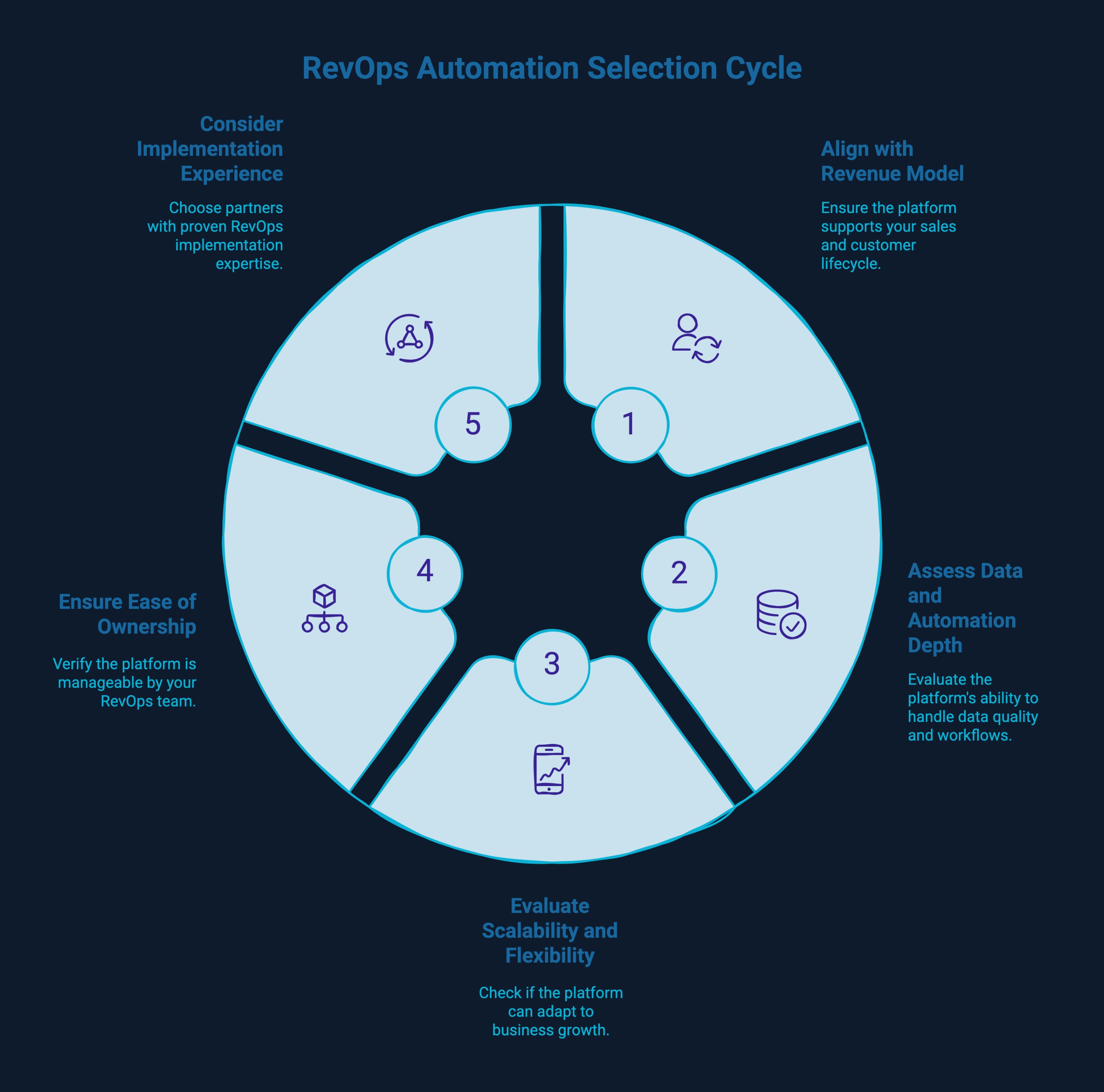
Choosing the right RevOps automation platform or partner is about fit, not feature lists. The wrong choice adds rigidity and overhead, while the right one compounds efficiency as you scale. Key criteria to focus on:
The best RevOps automation choices solve today’s problems while preparing your revenue engine for what comes next.
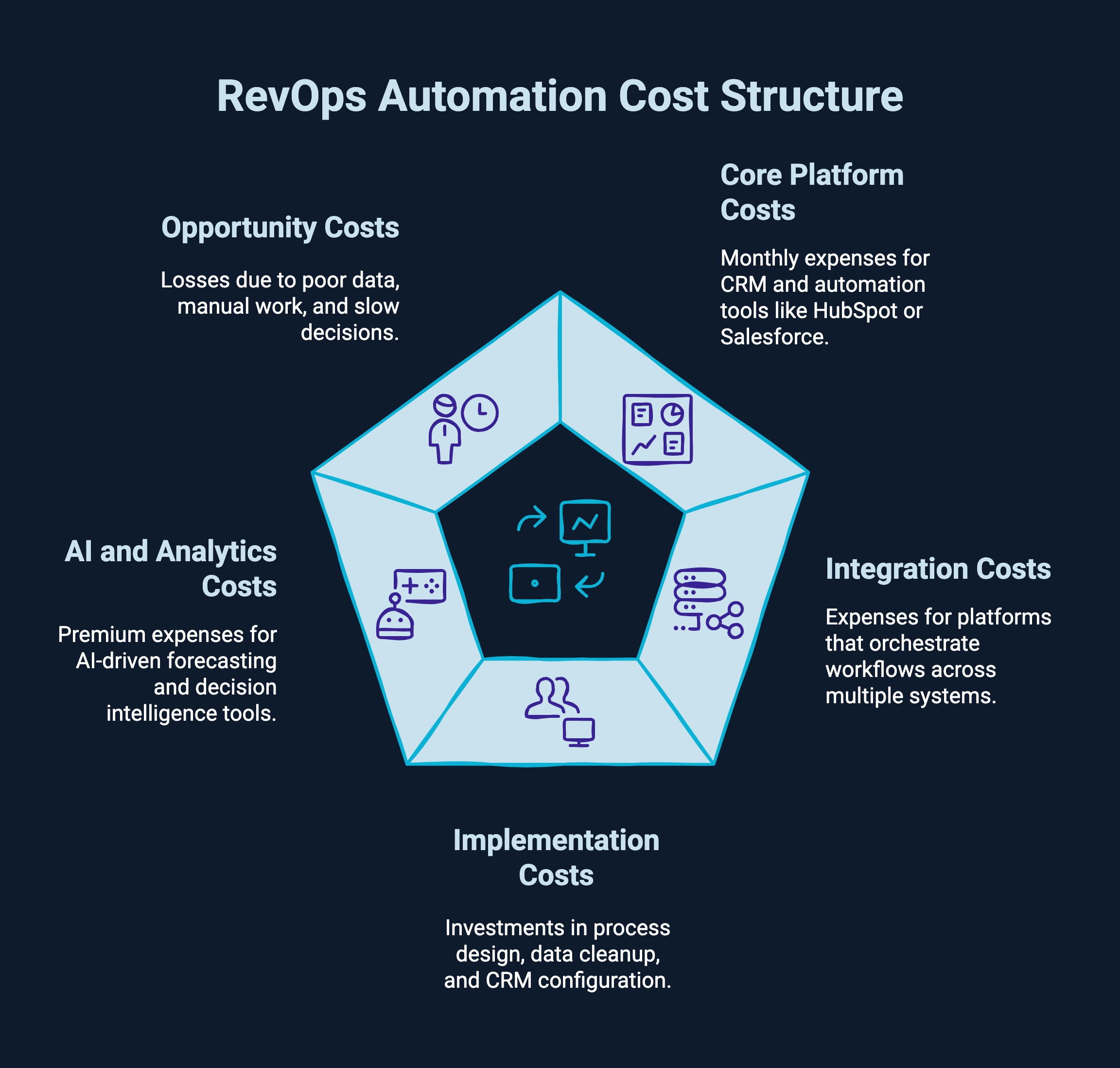
RevOps automation costs vary based on company size, revenue complexity, tools, and implementation approach. There is no fixed price. Costs scale with how sophisticated and reliable your revenue operations need to be.
High-performing teams treat RevOps automation as a strategic investment. They start small, scale intentionally, and spend on workflows that directly impact revenue outcomes.
Making the move from Sales Ops to RevOps is easy to talk about and hard to execute. Growth slows when systems break, data fragments, or teams lose focus during the transition. This is where LeadGem plays a critical role.
LeadGem is a B2B growth and revenue operations agency that designs and builds RevOps systems meant to scale with real-world sales execution. Based in Amsterdam and working with teams across Europe, North America, and Australia, LeadGem blends RevOps, outbound systems, and growth marketing into a single execution model focused on pipeline reliability and revenue consistency.
How LeadGem approaches RevOps differently:
For B2B teams ready to operationalize RevOps without slowing momentum, LeadGem helps turn alignment and automation into predictable growth. Contact us today!
RevOps automation is no longer about efficiency. It is about control. As revenue teams scale, the difference between predictable growth and constant firefighting comes down to how well systems, data, and execution are aligned.
The teams that win are not the ones with the most tools. They are the ones with clear revenue logic, clean automation, and the ability to act on signals instead of reacting to problems. When RevOps automation is done right, growth feels deliberate, not chaotic.
If scaling revenue without losing speed or visibility is the goal, RevOps automation is not optional. It is the operating system that makes sustainable growth possible.
Revenue Operations, or RevOps, is a business approach that aligns sales, marketing, and customer success around shared data and processes. A RevOps automated company uses AI-powered RevOps solutions for scaling teams to drive efficiency, predictability, and revenue growth.
High impact RevOps automations eliminate manual tasks, reduce data entry, and orchestrate the sales pipeline. By unifying account data across the tech stack, teams improve sales performance, accelerate the sales cycle, support sales reps, strengthen revenue forecasting, and close deals.
AI improves RevOps automation by delivering predictive insights from customer interactions, sales conversations, and sales calls. It enhances sales forecasting, revenue intelligence, and conversation intelligence, helping sales leaders prioritize opportunities, guide sales reps, and optimize sales processes at scale today.
Revenue operations tools centralize customer information on a unified platform, replacing data silos with data management. They automate routine tasks and manual data entry, connect marketing operations and customer success teams, improve operational efficiency, and support revenue orchestration across the revenue cycle.
RevOps in SaaS is a revenue operating model that aligns marketing, sales, and customer success around shared data, processes, and metrics. It removes silos, improves forecasting, standardizes sales operations, and enables predictable growth across the entire subscription revenue lifecycle globally.
Revenue Operations consultancies support startups, scale-ups, and enterprises in aligning sales, marketing, and customer success. As a RevOps automated agency, they help sales leaders and operations teams eliminate data silos, optimize sales processes, improve forecasting accuracy, and build scalable revenue orchestration across teams.
Top-rated RevOps automation providers focus on hands-on execution, not just strategy. They design and implement CRM architecture, automation, data flows, and forecasting systems. Firms like LeadGem stand out by operationalizing RevOps end-to-end.