

Contact



SaaS revenue often breaks before it scales. Leads come in, deals slow down, forecasts miss, and churn quietly reduces growth. In most cases, the issue is not demand. It is how revenue teams and systems operate together.
As companies grow, marketing, sales, and customer success begin to work in silos. Data spreads across tools, handoffs become inconsistent, and leaders lose a clear view of what drives revenue. Adding more people or software increases complexity when the operating model stays fragmented.
This guide explains how SaaS companies can fix that fragmentation. You will learn how to align teams, processes, and data into a single revenue engine, identify common breakdowns, and build a scalable model designed for predictable growth.
Revenue Operations, or RevOps, is a centralized approach to managing the systems, processes, and data that drive revenue across a SaaS business. Instead of operating marketing, sales, and customer success in isolation, RevOps brings them under one operational model.
In a SaaS environment, revenue does not stop at the closed deal. It includes onboarding, adoption, renewals, and expansion. RevOps supports this full lifecycle by ensuring teams share the same data, definitions, and goals from first touch to long-term retention.
Traditional operations are typically siloed. Marketing ops focuses on lead generation, sales ops manages pipelines and forecasting, and customer success ops tracks renewals and support, often using separate tools and metrics. This structure can create data gaps, misaligned incentives, and broken handoffs.
RevOps replaces these silos with a unified operating model. It aligns all revenue teams around shared metrics, standardized processes, and a single source of truth.
Rather than optimizing individual team performance, RevOps focuses on improving the entire revenue system, making growth more predictable, scalable, and customer-centric for SaaS businesses.
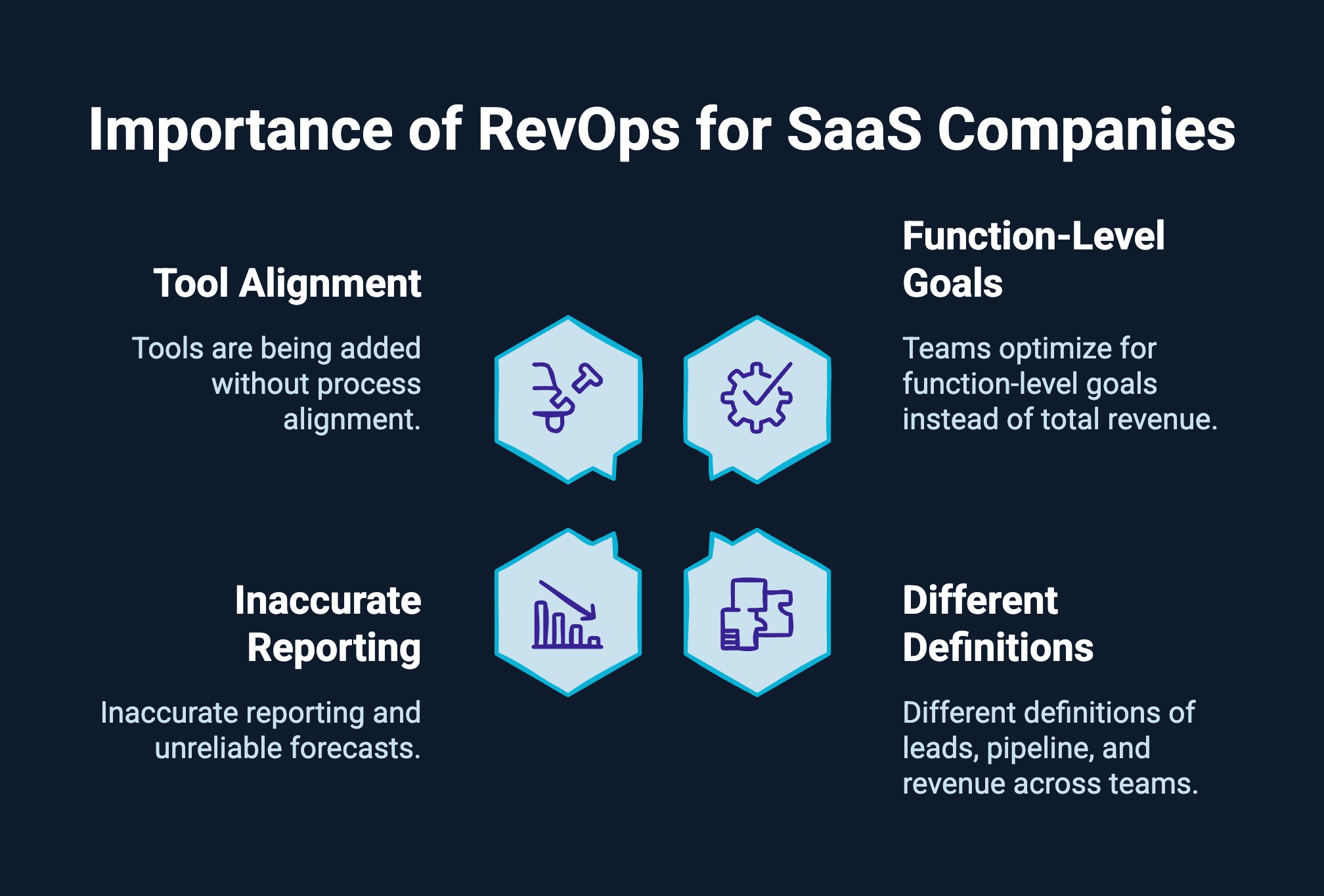
SaaS growth relies on predictable, repeatable revenue. As companies scale, small gaps between marketing, sales, and customer success quickly turn into revenue leaks. Rising acquisition costs and longer sales cycles make these gaps harder to ignore.
Common reasons RevOps becomes necessary include:
As complexity increases, leadership loses visibility into what actually drives growth. Decisions become reactive, and scaling feels harder than it should.
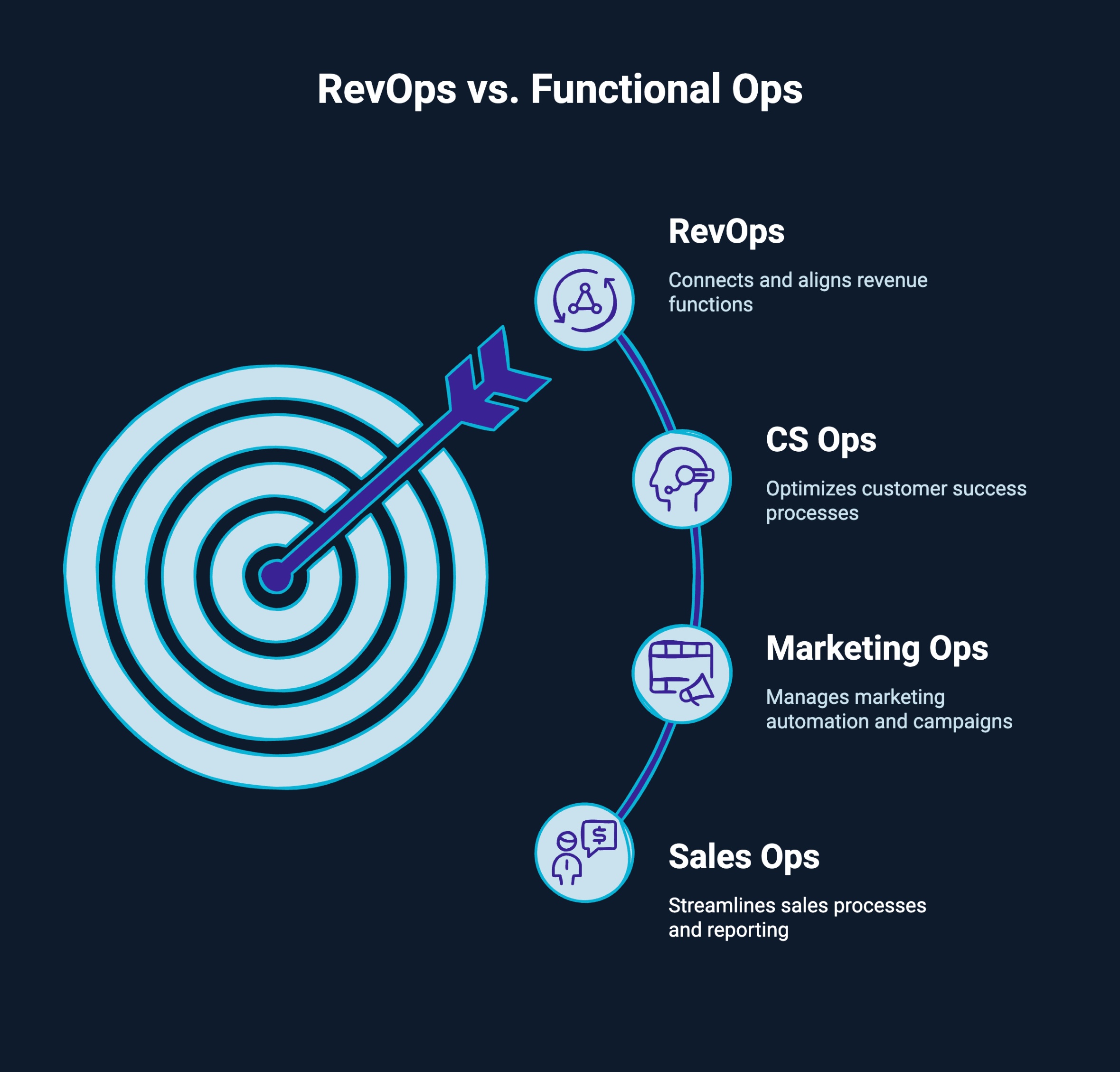
Sales Ops, Marketing Ops, and CS Ops each focus on improving performance within a single function. They optimize tools, processes, and reporting for their respective teams. While this improves local efficiency, it often creates gaps across the revenue funnel.
Each function typically owns:
The problem is not the existence of these roles. The problem is the lack of shared ownership across the full customer lifecycle.
RevOps sits above individual functions and connects them. It owns how revenue flows from first touch to renewal by aligning teams around shared definitions, metrics, and systems.
RevOps focuses on:
For SaaS companies, RevOps ensures growth is not driven by isolated team wins, but by a coordinated revenue system built to scale.
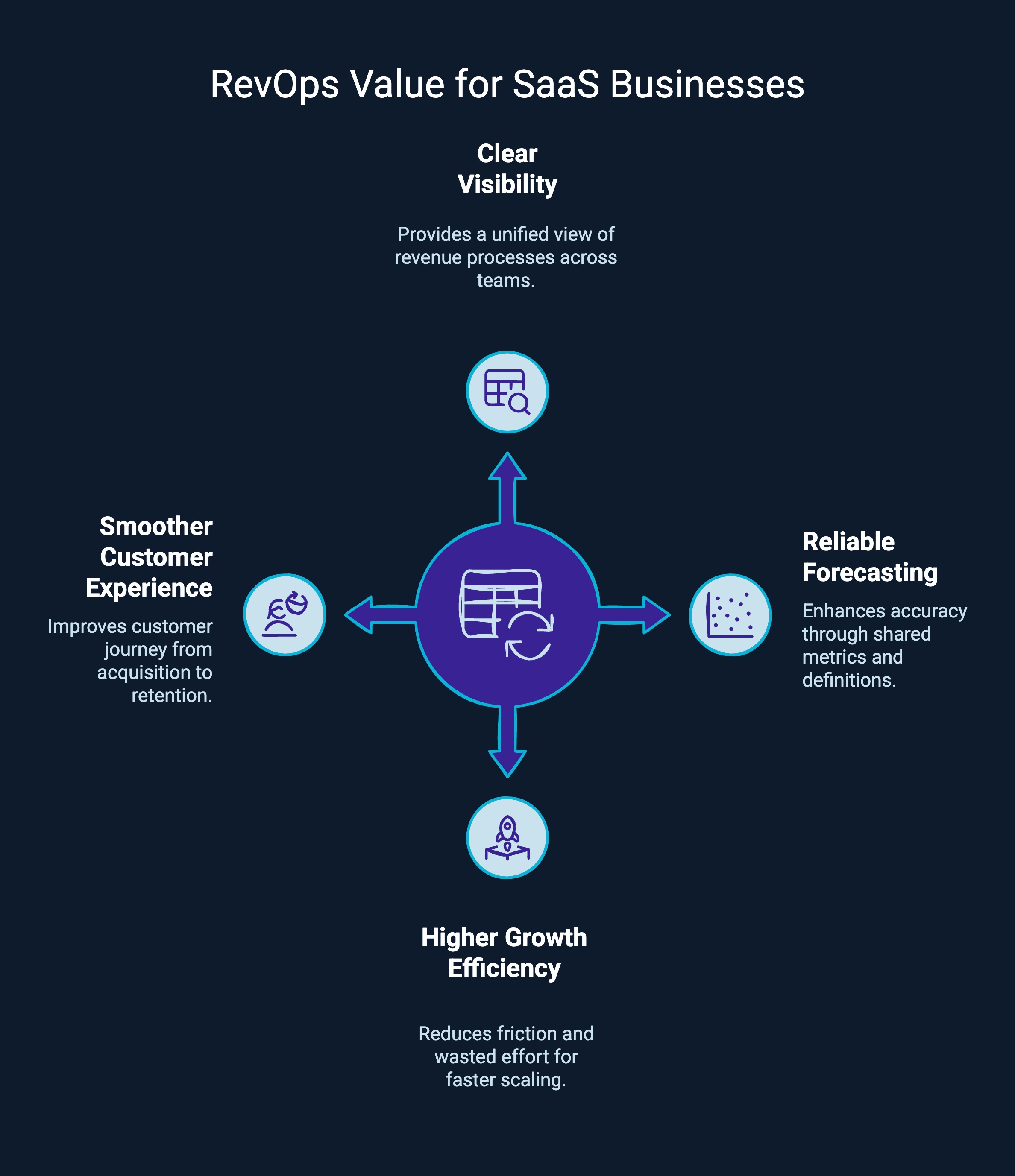
RevOps helps SaaS companies scale by aligning how revenue is generated, closed, and retained. Instead of optimizing teams in isolation, it creates a single system that supports predictable growth.
The core value RevOps delivers includes:
For SaaS businesses built on recurring revenue, this alignment improves control, consistency, and long-term growth outcomes.
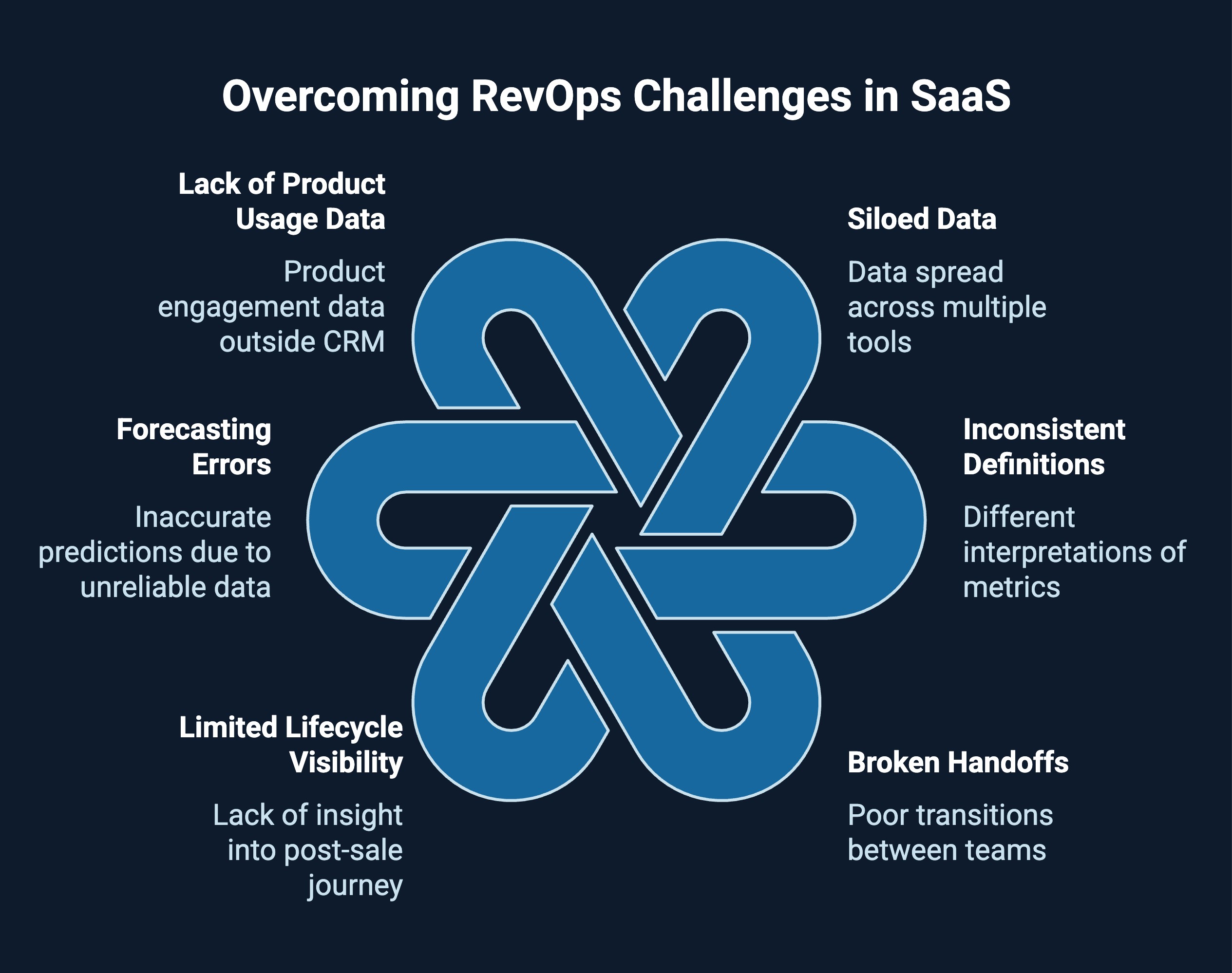
SaaS companies often recognize the need for RevOps only after growth starts to slow or become unpredictable. The challenges usually appear as operational issues, but they stem from deeper alignment and system gaps.
Common RevOps challenges SaaS companies face include:
Left unresolved, these issues compound as the company scales. RevOps addresses them by creating shared ownership, standardized processes, and a unified data foundation.
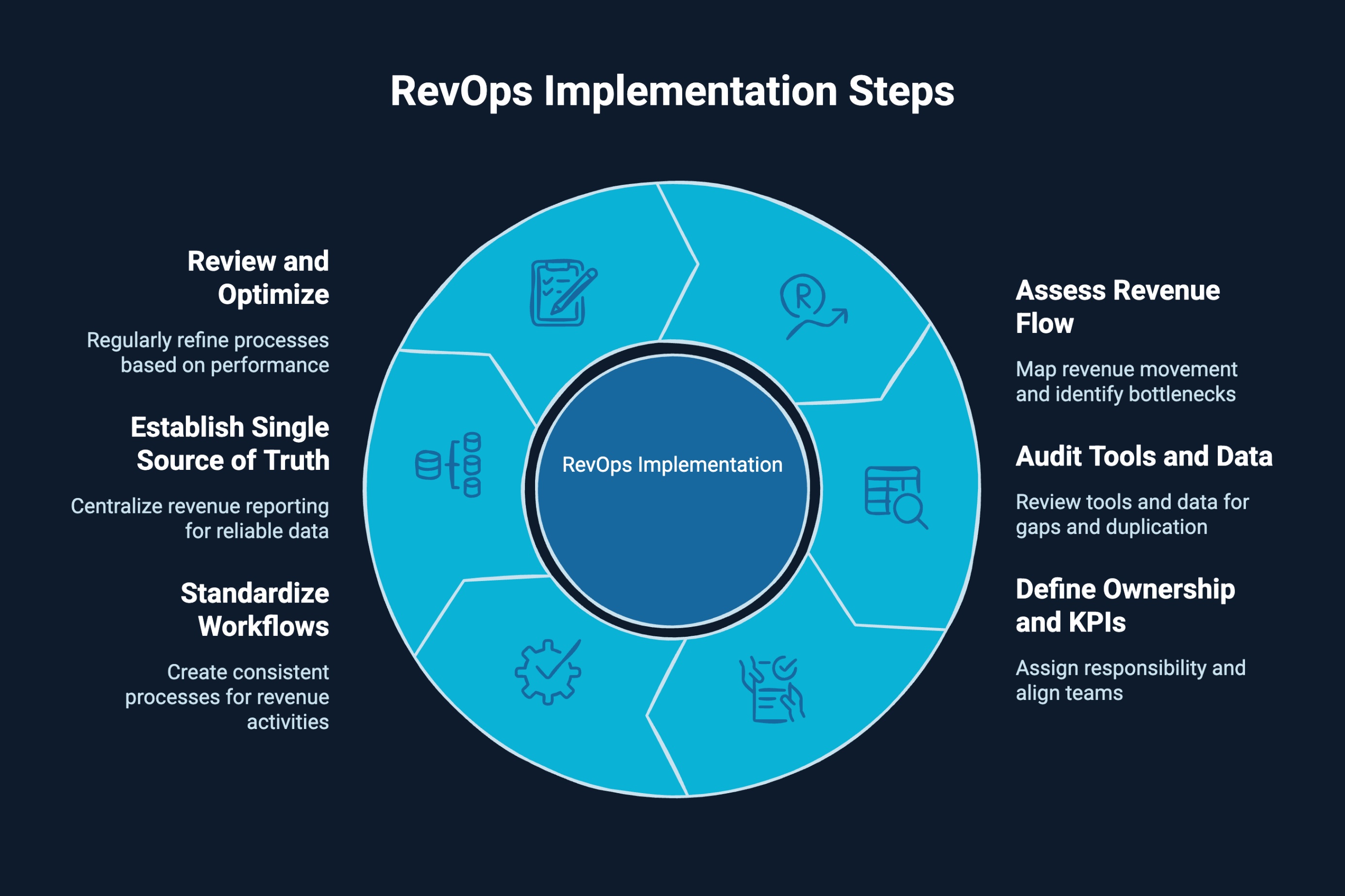
Implementing RevOps works best as a structured initiative rather than a one-time reorg. SaaS companies need to align teams, systems, and data in a way that supports recurring revenue without disrupting day-to-day execution.
A step-by-step RevOps implementation typically includes:
Start by mapping how revenue moves from lead generation to renewal. Identify where handoffs slow down, where ownership is unclear, and where deals or customers commonly get stuck.
Review the tools used by marketing, sales, and customer success. Look for duplicated systems, missing integrations, and reporting gaps that prevent a unified view of revenue.
Assign clear responsibility for revenue operations and align teams around shared metrics. This ensures marketing, sales, and customer success are working toward the same revenue outcomes.
Create consistent processes for lead routing, pipeline stages, onboarding, renewals, and expansion. Standardization reduces friction and improves execution as volume increases.
Centralize revenue reporting so leadership can rely on one set of numbers for forecasting, performance tracking, and decision-making.
RevOps is ongoing. Regularly review performance, gather feedback from teams, and refine processes as the business grows and revenue complexity increases.
For SaaS companies, this step-by-step approach builds a repeatable RevOps foundation that supports predictable, scalable growth.
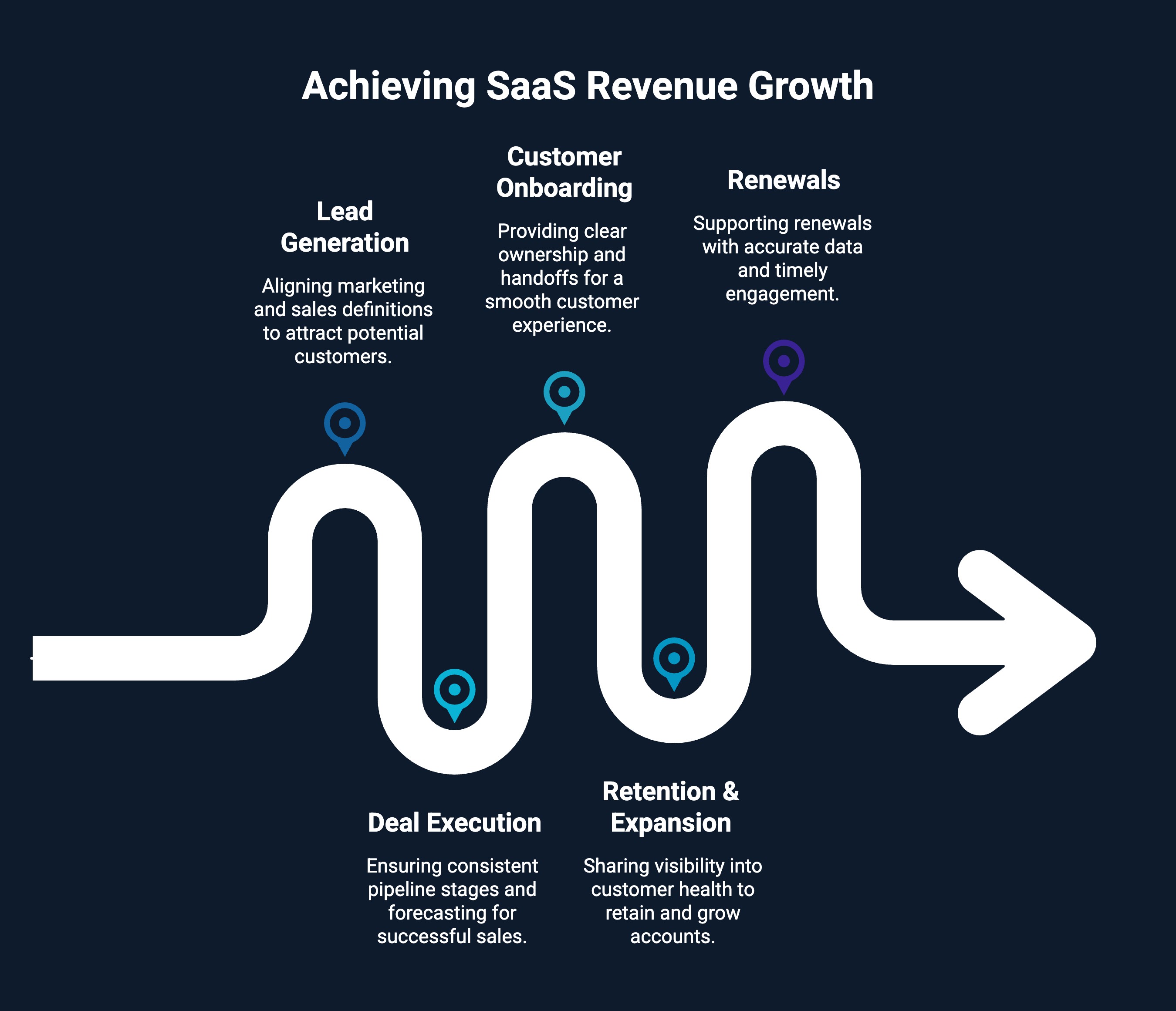
SaaS revenue does not end at the first deal. Growth depends on how well teams manage the full customer lifecycle, from acquisition to renewal and expansion. The RevOps framework provides structure across each stage so teams stay aligned as customers move through the funnel, whether it is built internally or guided by a RevOps consultant for SaaS to accelerate alignment and execution.
Across the SaaS revenue lifecycle, RevOps supports:
By connecting these stages under one operating model, RevOps helps SaaS companies reduce friction, improve customer experience, and drive predictable recurring revenue.
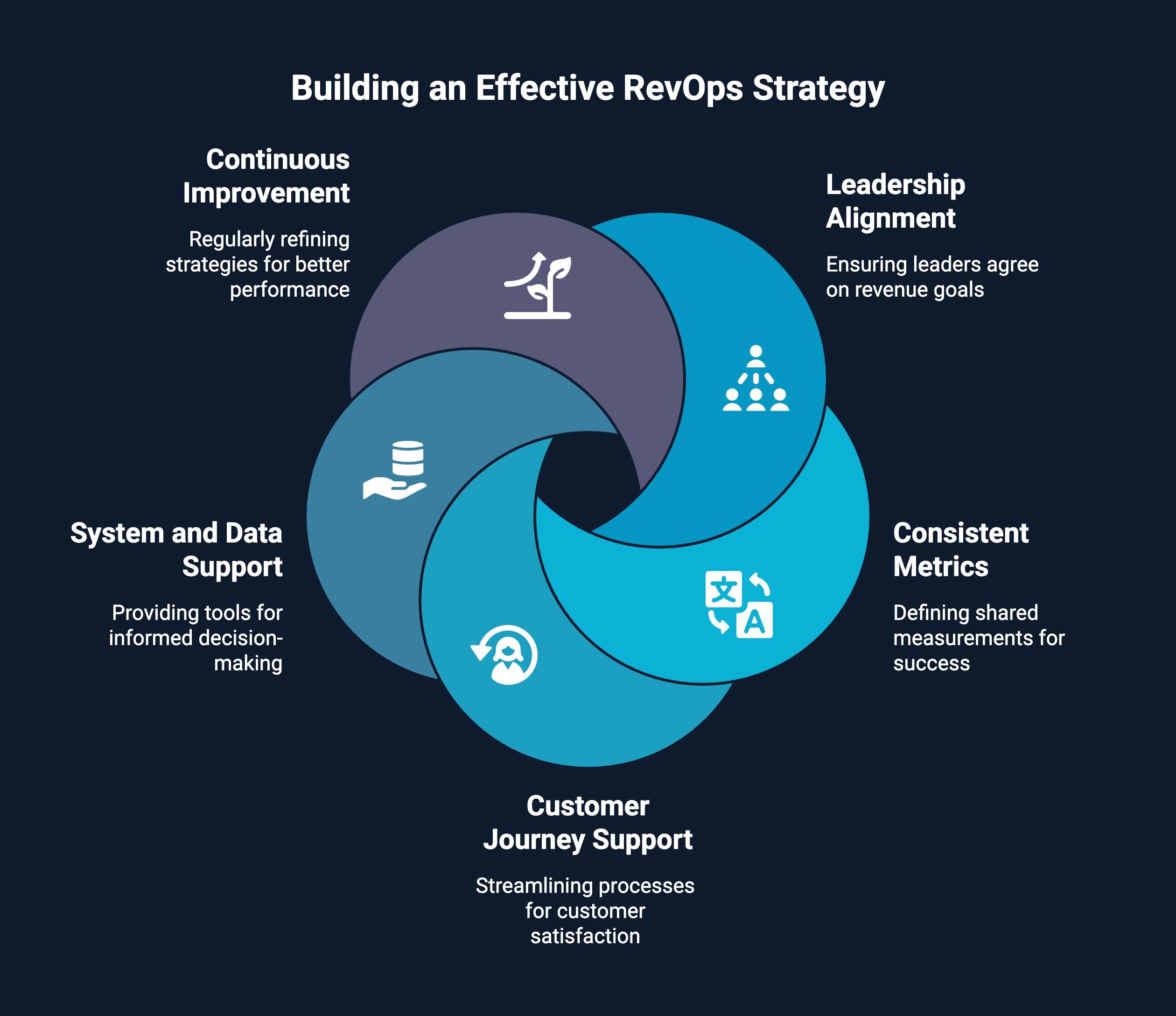
A RevOps strategy defines how revenue teams align around growth, execution, and accountability. For SaaS companies, a strong RevOps strategy for SaaS companies must support recurring revenue while remaining flexible as the business scales.
An effective RevOps strategy focuses on the following areas:
A well-defined RevOps strategy gives SaaS companies structure without rigidity. It creates clarity across teams while supporting scalable, predictable growth.
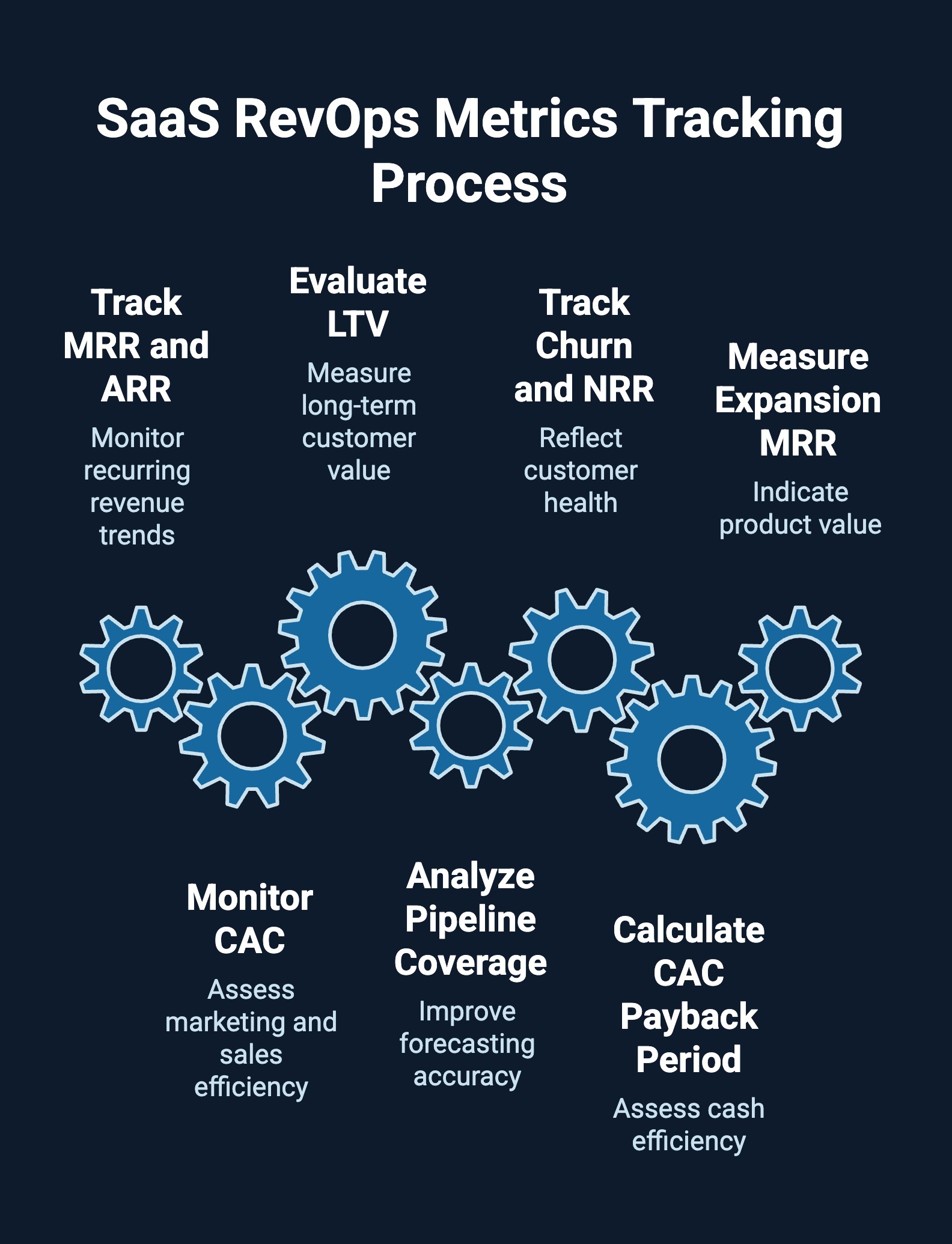
RevOps relies on metrics that reflect the full revenue lifecycle, not just top-of-funnel activity. For SaaS companies, tracking the right metrics ensures teams focus on sustainable, recurring growth instead of isolated wins.
Key revenue metrics SaaS RevOps teams should track include:
Tracking these metrics consistently gives SaaS leaders a clear picture of performance. RevOps ensures these numbers are accurate, aligned, and used to guide decisions.
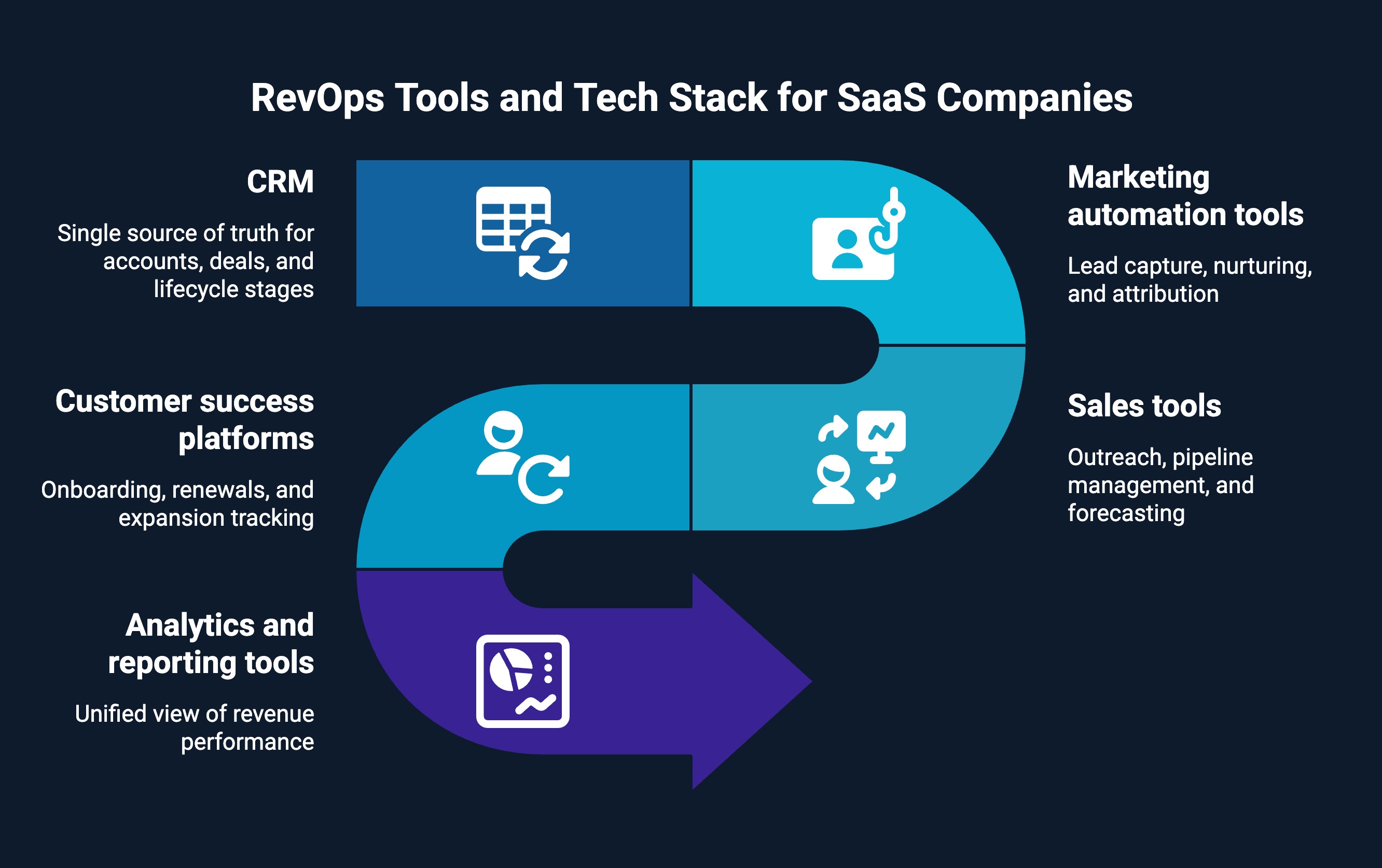
RevOps tools help SaaS companies align teams, workflows, and data across the revenue lifecycle as part of a broader RevOps framework for SaaS. The focus is not on adding more software, but on building a connected stack that supports consistent execution and reporting.
A typical RevOps tech stack includes:
When these tools are properly integrated, RevOps teams gain reliable data and clearer visibility into how revenue moves through the business. This makes it easier to scale processes without increasing operational complexity.
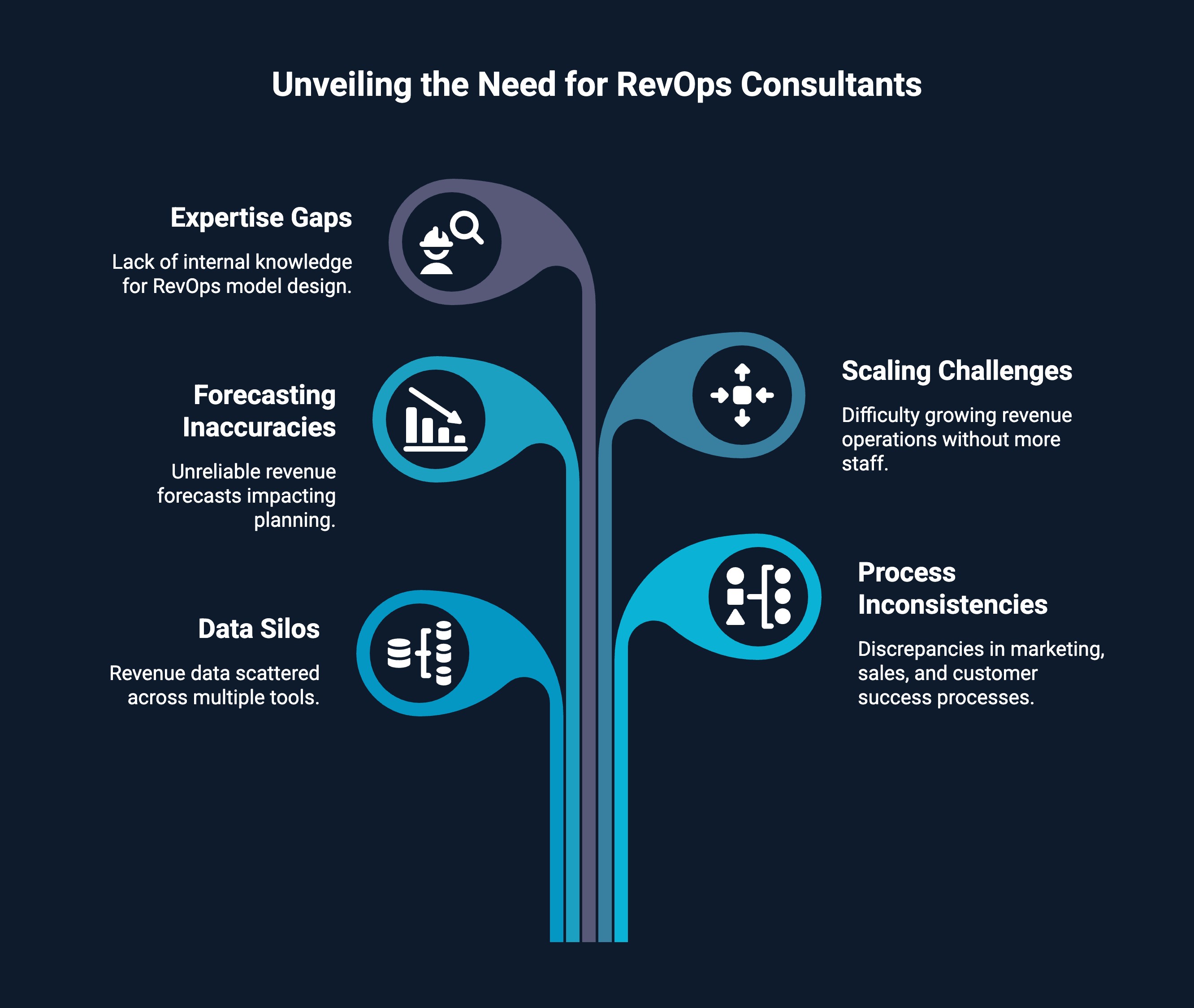
Many SaaS companies reach a point where internal teams can no longer keep up with revenue complexity. Growth slows, reporting becomes unreliable, and operational issues start affecting pipeline and retention.
Common signals that indicate the need for a RevOps consultant include:
When data lives in multiple systems such as CRM, marketing tools, product analytics, and billing platforms, teams struggle to agree on numbers. Metrics like pipeline value, MRR, or churn often vary depending on the source.
A RevOps consultant helps consolidate data into a single source of truth, align definitions, and build reliable reporting that leadership can trust for decision-making.
Marketing, sales, and customer success often develop their own workflows over time. This leads to inconsistent lifecycle stages, unclear handoffs, and duplicated effort.
A RevOps consultant standardizes processes across teams, ensuring leads, deals, and accounts move smoothly through the funnel with clear ownership and accountability at every stage.
If forecasts frequently miss targets or change dramatically month to month, it becomes difficult to plan hiring, budgets, or growth initiatives. This is especially risky in SaaS, where recurring revenue and renewals matter as much as new sales.
RevOps consultants improve forecasting models by cleaning pipeline data, aligning stages to buyer behavior, and incorporating historical performance and retention trends.
When growth depends mainly on adding people rather than improving efficiency, operational costs rise quickly. Manual processes, ad hoc reporting, and workaround-heavy workflows slow teams down.
A RevOps consultant identifies automation opportunities, optimizes systems, and designs scalable processes so revenue can grow without proportional increases in headcount.
Many SaaS teams know they need RevOps, but do not have in-house experience to design or manage it effectively. This often leads to partial implementations, overbuilt automation, or underused tools.
A RevOps consultant brings proven frameworks, best practices, and an outside perspective to design a RevOps model that fits the company’s growth stage, go-to-market motion, and long-term goals.
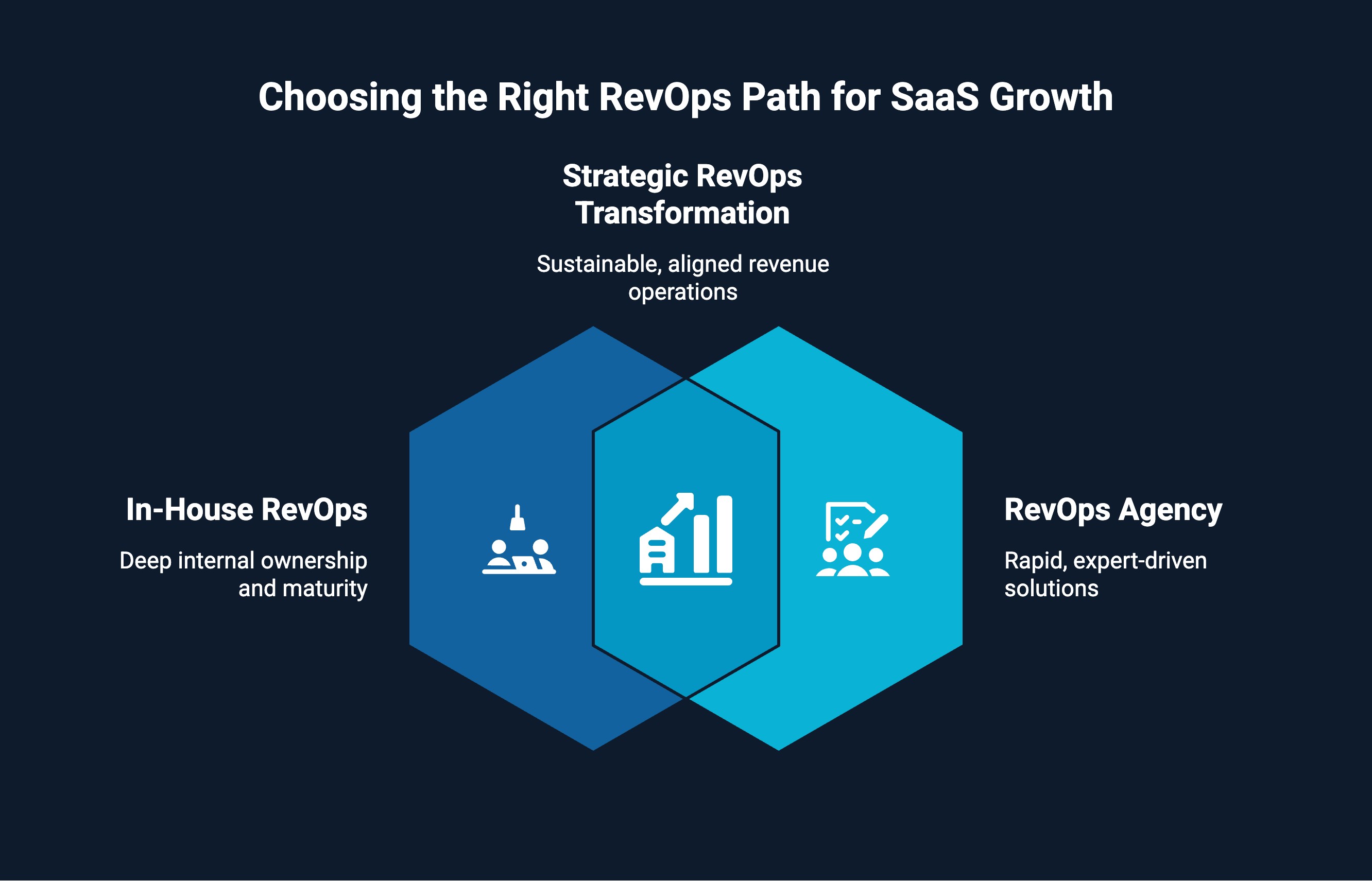
SaaS companies usually face this decision once revenue complexity starts to affect growth. The right choice depends on speed, expertise, and how mature the organization’s revenue operations are.
Building an in-house RevOps function is a good fit when:
Working with a B2B SaaS RevOps agency is often the better option when:
For many SaaS companies, agencies provide faster execution and external expertise, while in-house teams support long-term consistency. The decision should be based on urgency, internal capability, and the scale of change required.
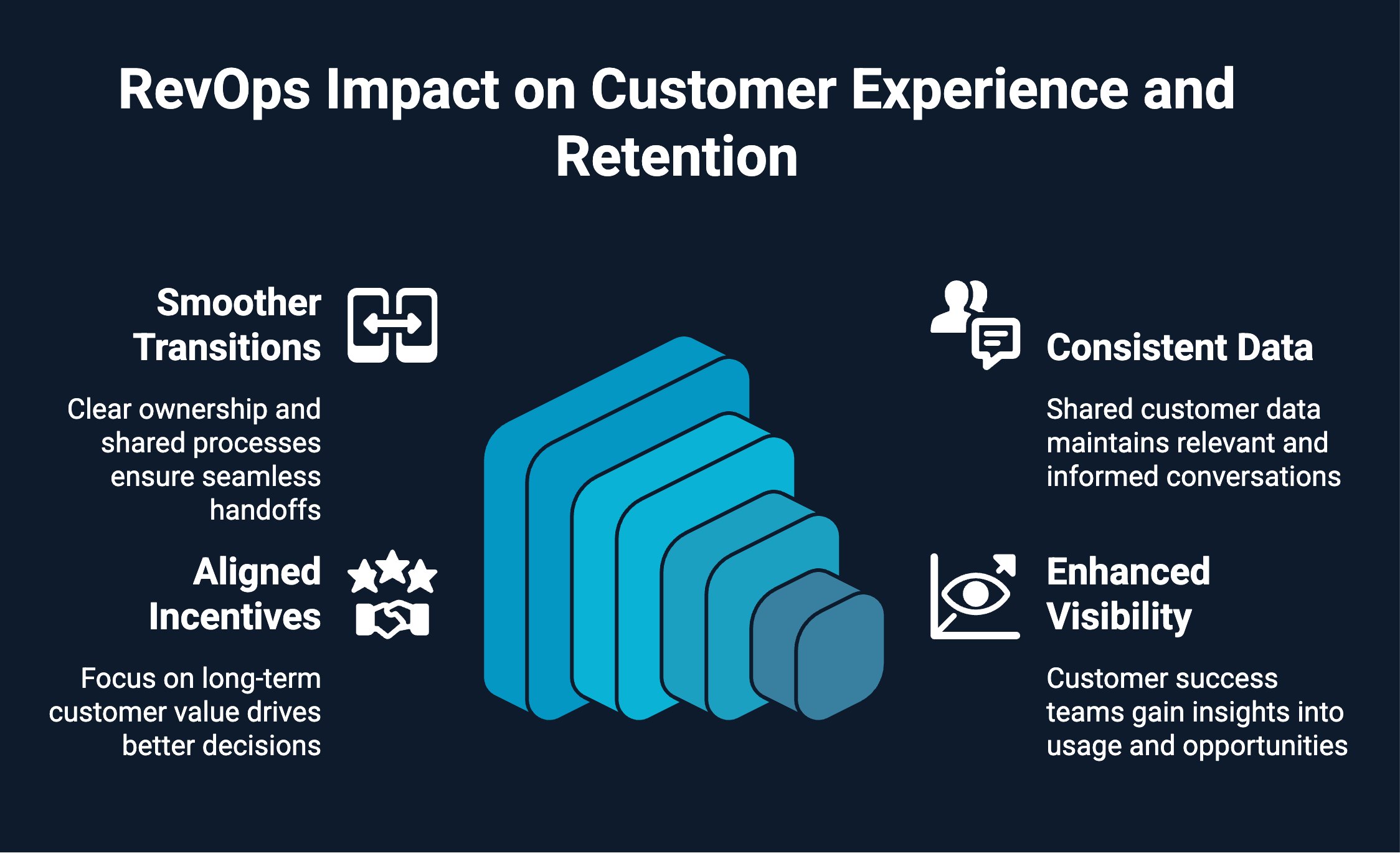
Customer experience in SaaS depends on consistency across the entire lifecycle. When teams operate in silos, customers receive mixed messaging, face delays during handoffs, and experience friction after the sale.
RevOps improves customer experience and retention by:
By aligning teams and systems, RevOps reduces friction for customers and helps SaaS companies retain and grow revenue more predictably.
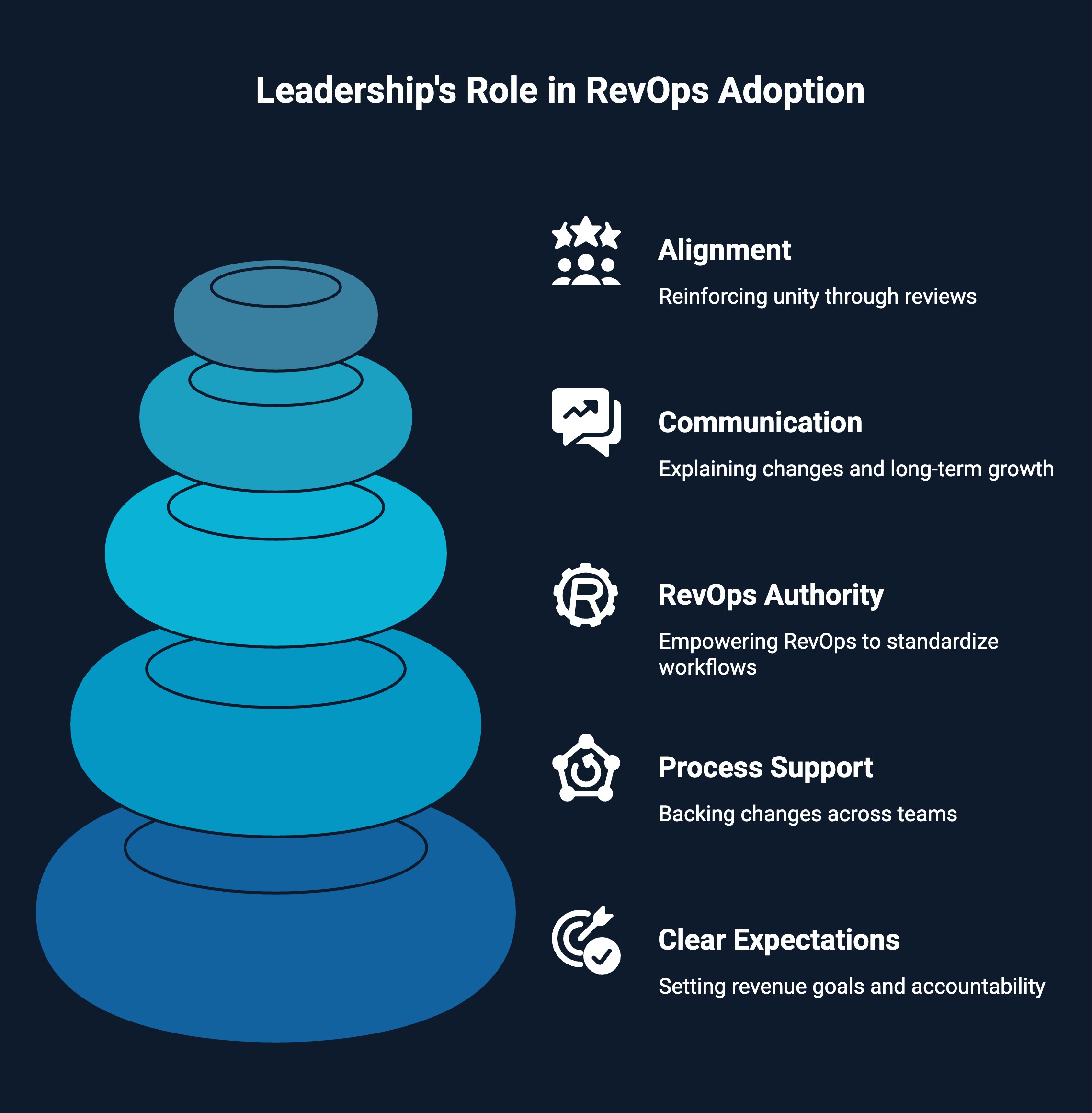
RevOps success depends heavily on leadership support. Without clear direction from the top, teams fall back into functional silos and inconsistent ways of working.
Leadership plays a key role in RevOps adoption by:
When leadership actively supports RevOps, adoption becomes smoother and more sustainable. Teams are more likely to follow new processes, trust shared data, and operate as a single revenue organization.
Many SaaS companies invest in tools and hires, but still struggle with fragmented revenue execution. Data sits in silos, outbound efforts lack focus, and RevOps initiatives stall during setup rather than driving the pipeline.
LeadGem helps SaaS teams fix this by building RevOps systems that actually execute. Headquartered in Amsterdam, the Netherlands, LeadGem is a B2B growth and revenue operations agency with over 5 years of experience in growth marketing and growth hacking, focused on turning RevOps strategy into predictable revenue.
SaaS companies choose LeadGem because it delivers:
For SaaS teams ready to move from fragmented operations to a unified revenue engine, LeadGEM provides the structure and execution needed to scale.
SaaS growth breaks when revenue operations do not scale with the business. Misaligned teams, fragmented data, and inconsistent processes make growth harder to predict over time.
RevOps brings structure to that complexity. It aligns teams, connects systems, and creates a clear view of revenue from acquisition to retention.
For SaaS companies focused on sustainable growth, RevOps is not an add-on. It becomes the operating model that makes scale possible.
RevOps in SaaS aligns different departments across the entire customer journey. It removes data silos, connects sales operations, marketing operations, and customer service, and enables the revenue operations team to drive revenue growth through shared data, key metrics, and a common goal.
The best tool supports revenue management across the revenue cycle, integrates with customer relationship management and finance teams, and uses data analytics to track revenue streams, sales data, and key SaaS metrics for accurate revenue generation.
New sales reps struggle due to siloed operations, inefficient processes, poor sales enablement, and limited sales pipeline visibility. Weak lead management, misaligned marketing campaigns, and unclear sales processes reduce sales productivity and slow revenue growth.
Sales, Marketing, and Customer Success succeed with CRM, marketing automation, sales enablement, customer engagement, data analytics, and revenue operations tools that remove data silos, align different teams, and support the entire customer journey.
The 3 3 2 2 2 rule describes expected growth stages in SaaS revenue generation, showing how revenue growth typically slows as companies scale, helping teams set realistic sales pipeline, revenue potential, and key metric expectations.
The rule of 40 states that a SaaS company’s revenue growth rate plus profit margin should exceed 40%, guiding strategic decisions around revenue management, customer retention, and long-term revenue streams.
Professionals moving into SaaS often adjust to faster sales cycles, subscription revenue models, and data-driven sales processes. Success comes from learning SaaS metrics, customer behavior, revenue operations, and close collaboration across sales, marketing, and customer success teams.