

Contact


B2B sales teams face rising revenue targets, longer buying cycles, and increasingly complex decision-making processes. Yet many organizations still operate with inconsistent workflows and manual tracking, making performance unpredictable and difficult to scale.
When sales stages lack structure and qualification varies by rep, deals stall, and forecasts become unreliable. Inefficiencies reduce visibility, slow conversion rates, and put pressure on profit margins. Over time, these gaps limit growth and increase the cost of acquiring new customers.
This blog outlines a practical framework for sales process optimization, covering proven strategies, essential tools, AI-driven improvements, and when to consider consulting support.
Sales process optimization is the structured improvement of your sales stages, workflows, and performance metrics to increase efficiency and revenue outcomes. It focuses on removing bottlenecks, standardizing qualifications, and improving conversion rates across the pipeline.
Instead of relying on inconsistent selling approaches, an optimized process creates a repeatable, data-driven system that improves forecasting accuracy, shortens sales cycles, and drives predictable growth.
In modern B2B organizations, sales process optimization is typically led by Revenue Operations (RevOps). RevOps aligns sales, marketing, and customer success around shared data, standardized workflows, and automation.
By centralizing reporting, enforcing consistent lifecycle stages, and integrating core systems, RevOps ensures every lead moves cleanly across teams without manual intervention, duplicate data, or information loss.
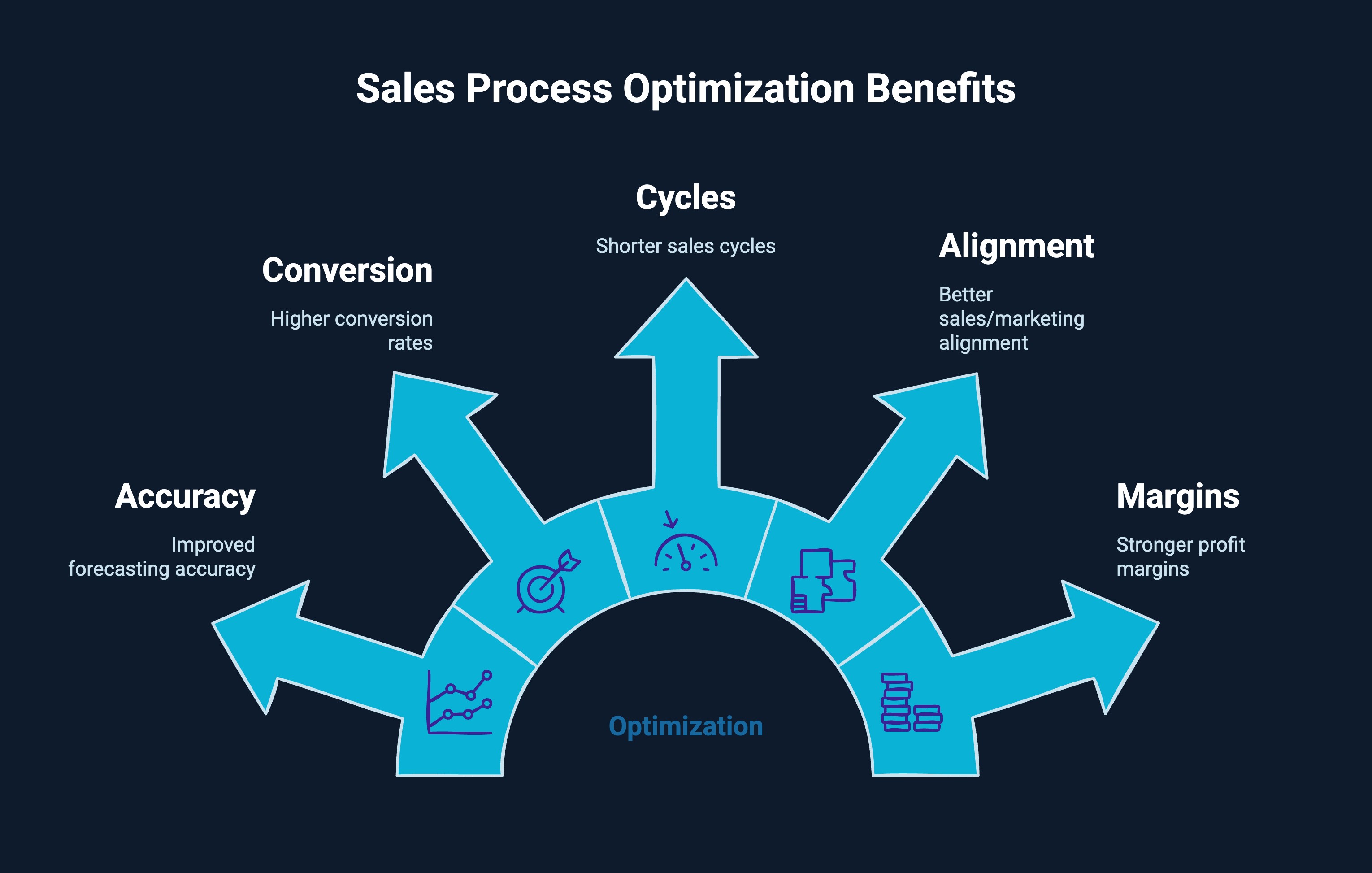
Modern B2B sales environments demand structure, visibility, and measurable performance. As buying journeys involve more stakeholders and longer evaluation cycles, relying on informal or rep-driven approaches limits scalability. A clearly defined and optimized process creates consistency, accountability, and predictable revenue outcomes.
Key benefits include:
For growing B2B teams, sales process optimization is not optional. It is foundational to sustainable and scalable revenue growth.
Want to scale faster and close more deals without drowning in manual tasks? Explore our list of the top sales automation agencies that can streamline your pipeline and accelerate revenue growth.
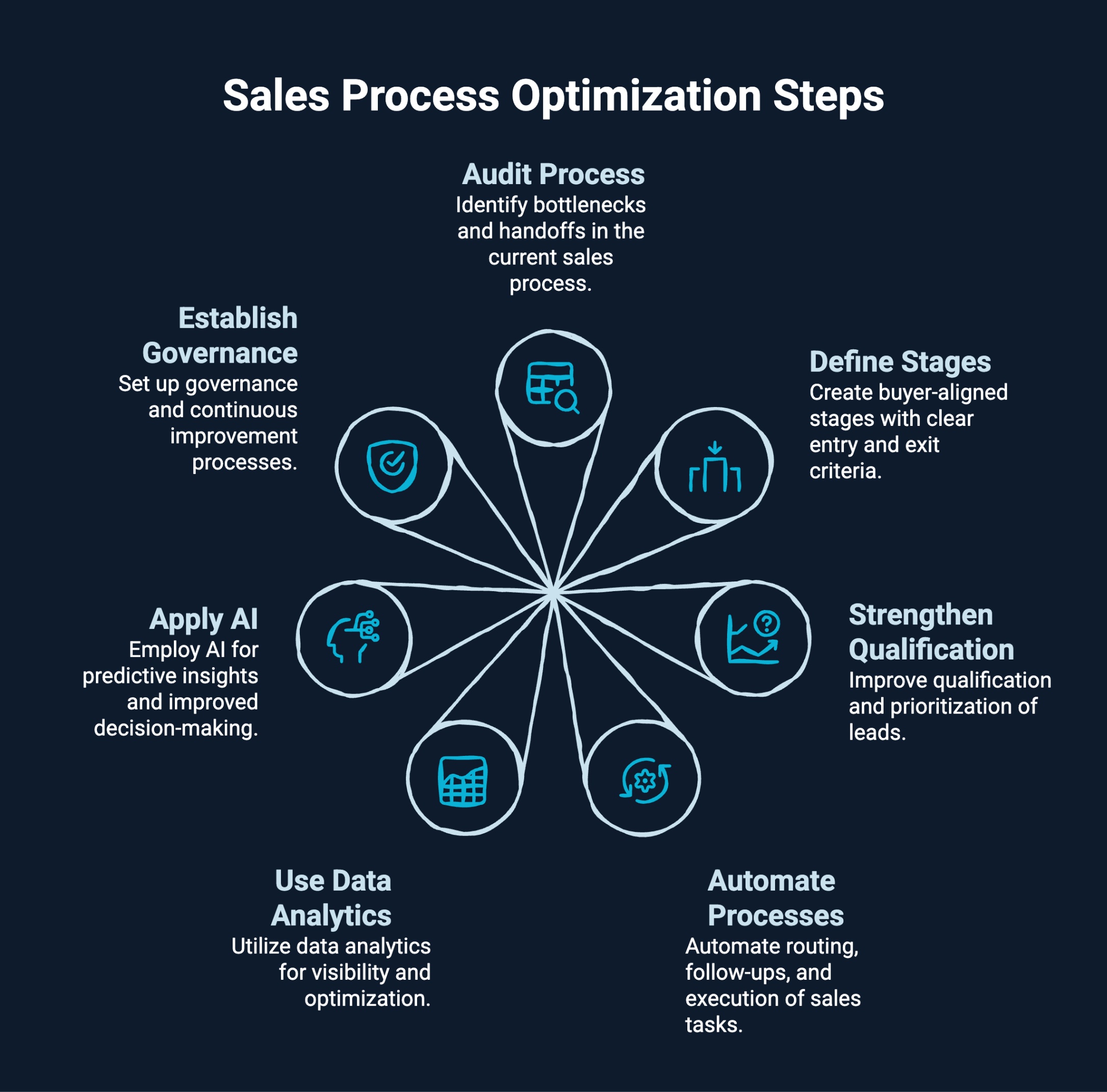
A structured framework is essential for removing bottlenecks, improving conversion rates, and building predictable revenue growth. Below is a practical 7-step approach B2B organizations can use to strengthen execution and operational alignment.
Start by mapping your existing pipeline from lead capture to closed deal. Identify:
Look beyond assumptions. Use CRM data, stage aging reports, and rep interviews to uncover friction points. A clear diagnostic baseline prevents surface-level fixes.
Your sales stages should reflect how buyers make decisions, not just internal milestones.
For each stage, define:
This eliminates subjective deal movement, improves forecasting accuracy, and ensures consistent execution across reps.
Not all leads deserve equal attention. Introduce structured qualification frameworks to improve opportunity quality and protect rep bandwidth.
Focus on:
Better prioritization increases win rates and reduces wasted effort on low-probability deals.
Once your process is clearly defined, automation can drive efficiency without compromising control.
Automate:
Automation should reinforce your defined workflow, not replace strategic thinking.
Operational visibility separates high-performing revenue teams from reactive ones.
Track:
Dashboards and reporting frameworks allow leadership to make proactive adjustments rather than relying on intuition.
Modern sales optimization increasingly leverages AI to enhance decision-making.
AI can help:
When combined with clean data and structured stages, AI improves forecast reliability and revenue predictability.
Optimization is not a one-time initiative. Sustainable performance requires ongoing governance.
Implement:
Continuous iteration ensures your sales process adapts to market shifts, competitive dynamics, and internal growth.
Ready to unlock faster revenue growth? Discover which marketing agency is best for sales enablement and find the partner that can truly power your sales success.
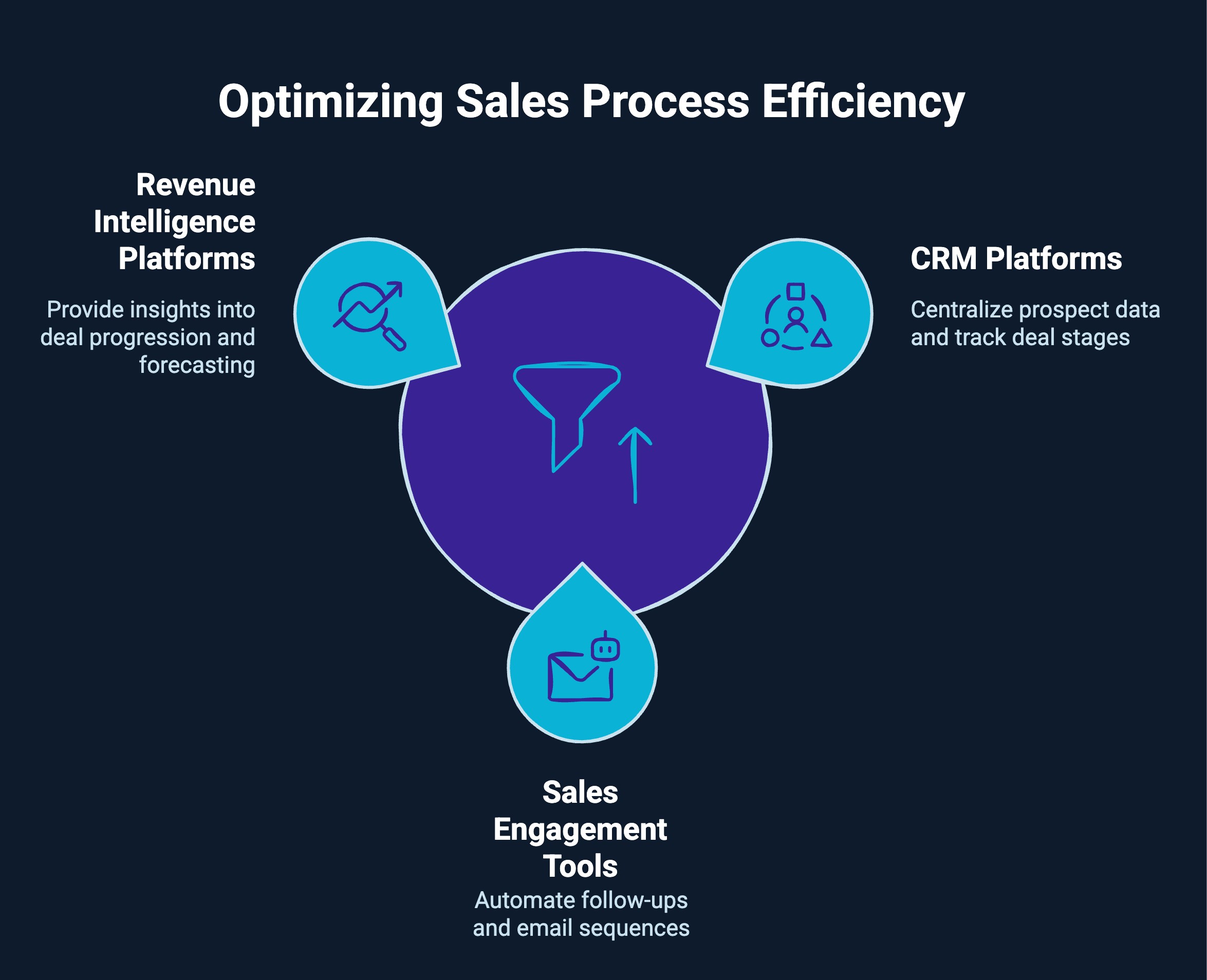
Technology plays a critical role in scaling and sustaining sales process optimization. The right platforms provide visibility into pipeline performance, automate repetitive tasks, and deliver actionable insights that improve forecasting and conversion rates. Below are key categories of platforms to optimize the sales process efficiency.
Customer relationship management systems form the backbone of a structured sales process. They centralize prospect data, track deal stages, and provide real-time pipeline visibility.
Examples include:
These platforms support standardized workflows, reporting dashboards, and performance tracking that strengthen accountability and forecasting accuracy.
Sales engagement platforms automate follow-ups, email sequences, task reminders, and lead routing. By reducing manual effort, they allow reps to focus on high-value conversations and relationship building.
Examples include:
Automation improves response times and ensures consistent execution across the pipeline.
Advanced analytics tools provide deeper insights into deal progression, win-loss patterns, and forecasting accuracy. These sales process optimization tools leverage conversation data, activity tracking, and predictive modeling to identify risk and opportunity.
For example:
These platforms enhance decision-making and support optimizing sales processes with data analytics.
Selecting the right combination of CRM, automation, and analytics solutions creates a unified system that increases efficiency, improves visibility, and supports long-term revenue growth.
Want smarter, faster sales? Dive into the Clay sales tool and see how it can turbocharge your workflow and boost conversions.
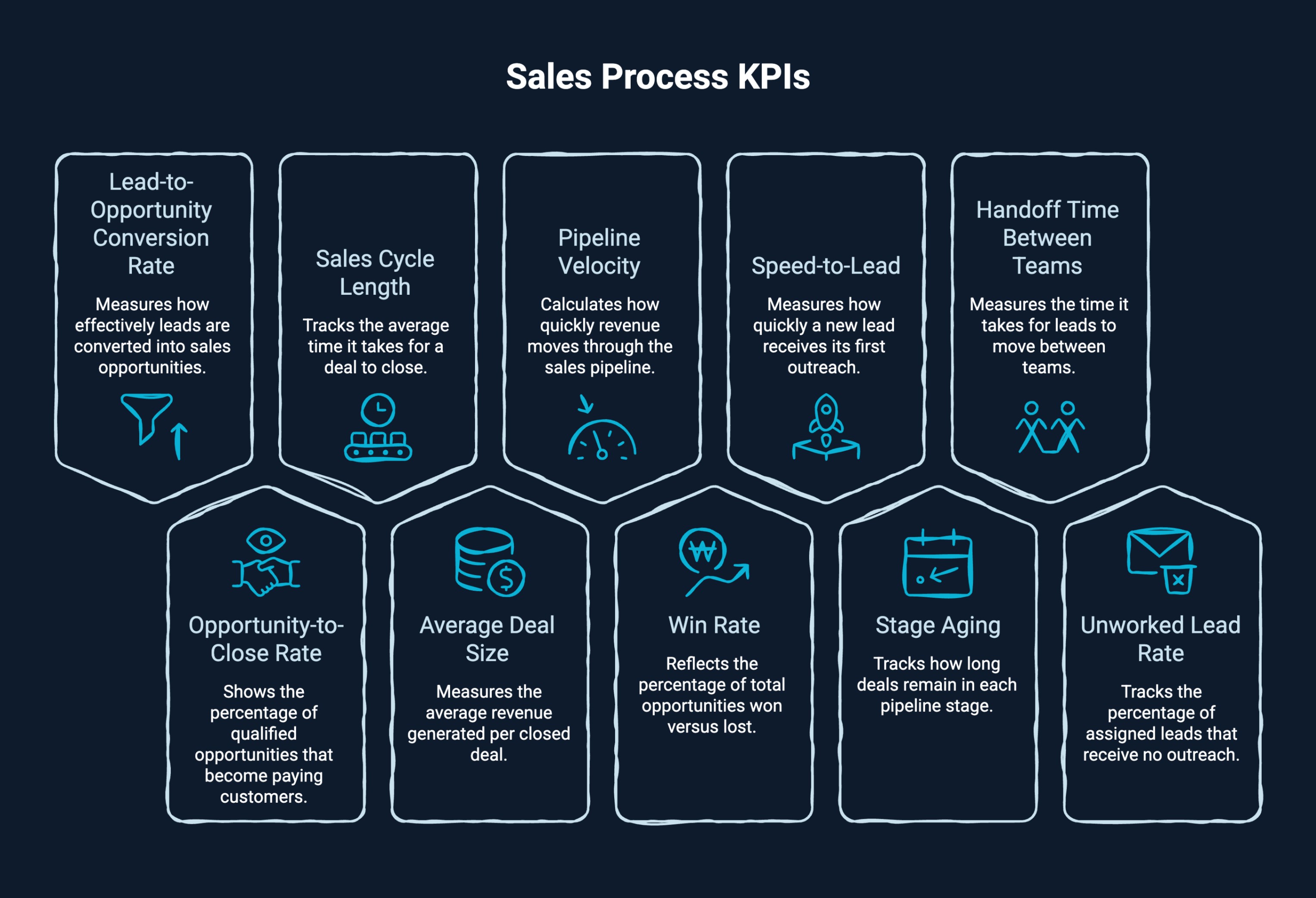
Tracking the right metrics ensures your sales process optimization efforts deliver measurable results. Clear KPIs provide visibility into conversion efficiency, pipeline health, and revenue predictability. Below are the most important indicators every B2B sales team should monitor.
This metric measures how effectively your team qualifies and converts incoming leads into real sales opportunities. A low conversion rate often signals weak targeting, poor qualification standards, or misalignment between marketing and sales.
Also known as close rate, this KPI shows the percentage of qualified opportunities that convert into paying customers. It reflects sales effectiveness, objection handling, pricing alignment, and competitive positioning.
Sales cycle length tracks the average time it takes for a deal to move from initial contact to closed status. Long cycles may indicate bottlenecks, unclear decision processes, or inefficient follow-ups.
This measures the average revenue generated per closed deal. Increasing average deal size often results from stronger qualification, upselling strategies, and better value communication.
Pipeline velocity calculates how quickly revenue moves through your pipeline. It combines deal volume, win rate, average deal size, and sales cycle length to provide a comprehensive view of revenue momentum.
Win rate reflects the percentage of total opportunities won versus lost. Monitoring this KPI helps identify competitive weaknesses, pricing issues, or qualification gaps that impact overall performance.
Beyond core revenue metrics, Revenue Operations teams focus on process visibility indicators that highlight execution gaps and workflow inefficiencies:
Speed-to-lead measures how quickly a new inbound lead receives its first outreach. Faster response times significantly improve conversion probability, especially in competitive B2B environments.
Stage aging tracks how long deals remain in each pipeline stage. Deals that sit too long in a single stage often signal stalled conversations, missing follow-ups, or unclear next steps.
This metric measures the time it takes for leads or accounts to move from marketing to sales, or from sales to customer success. Long handoff times increase friction, reduce buyer momentum, and create information gaps.
Unworked lead rate tracks the percentage of assigned leads that receive no outreach or activity. A high rate typically indicates workload imbalance, unclear ownership, or routing failures.
Consistently reviewing both revenue KPIs and RevOps visibility metrics allows leadership teams to identify bottlenecks early, improve operational alignment, and sustain long-term sales process optimization success.
Want to turn your optimized sales process into a fully automated revenue engine? Explore our in-depth guide on HubSpot Sales Automation.
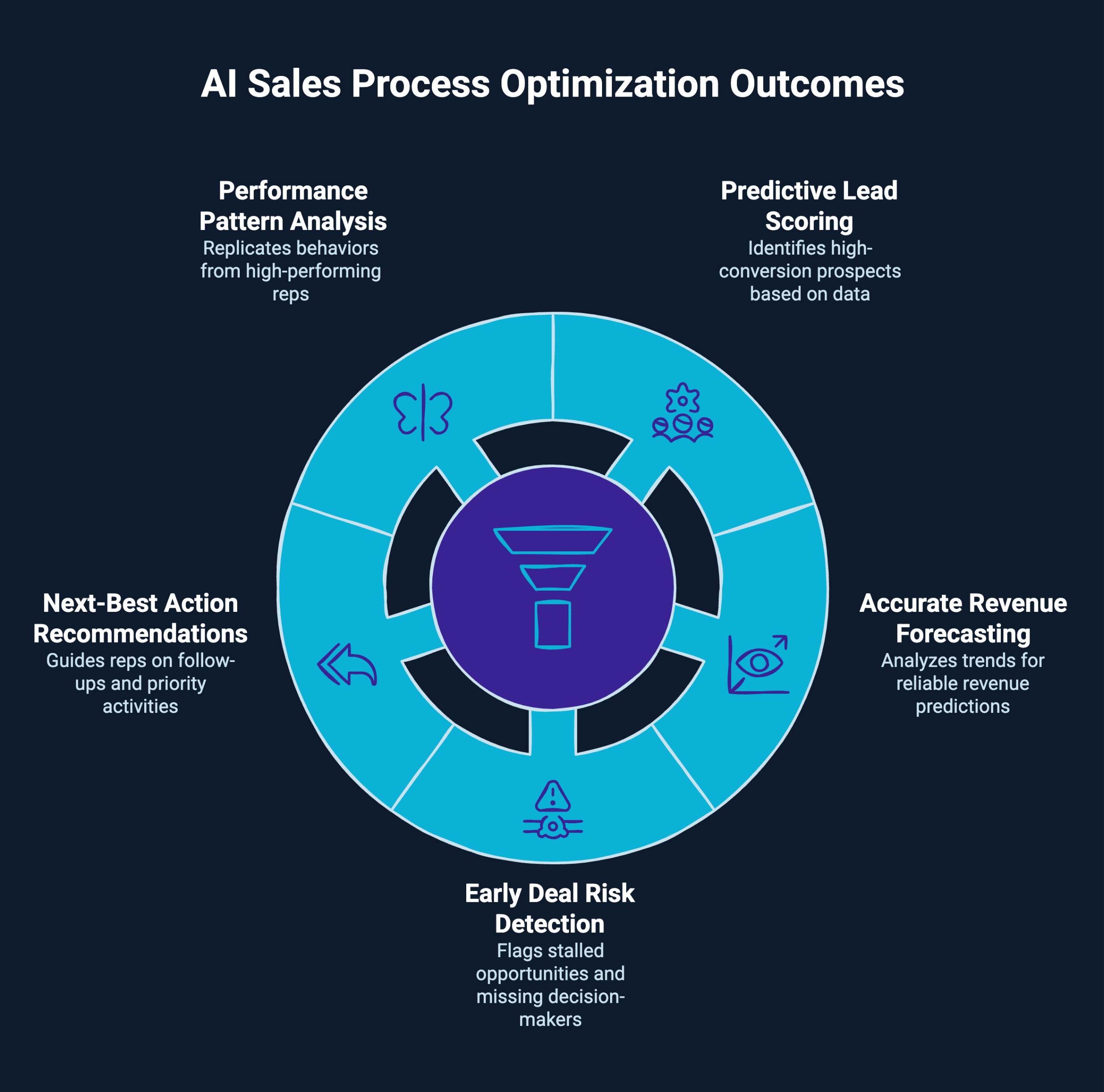
AI sales process optimization helps B2B teams remove bottlenecks, prioritize smarter, and forecast revenue with greater accuracy. By analyzing historical and real-time pipeline data, AI surfaces patterns that manual reviews often miss.
Instead of relying on intuition alone, teams get clear, data-backed guidance that improves execution and revenue predictability.
AI directly tackles pipeline friction. It highlights stalled opportunities, missing stakeholders, delayed follow-ups, and inactivity inside key accounts. This allows RevOps leaders to intervene early before deals quietly drop out of the pipeline.
Here are some key ways AI improves revenue outcomes:
When paired with structured processes and clean CRM data, AI shifts sales teams from reactive reporting to proactive revenue control. It turns visibility into action and action into predictable growth.
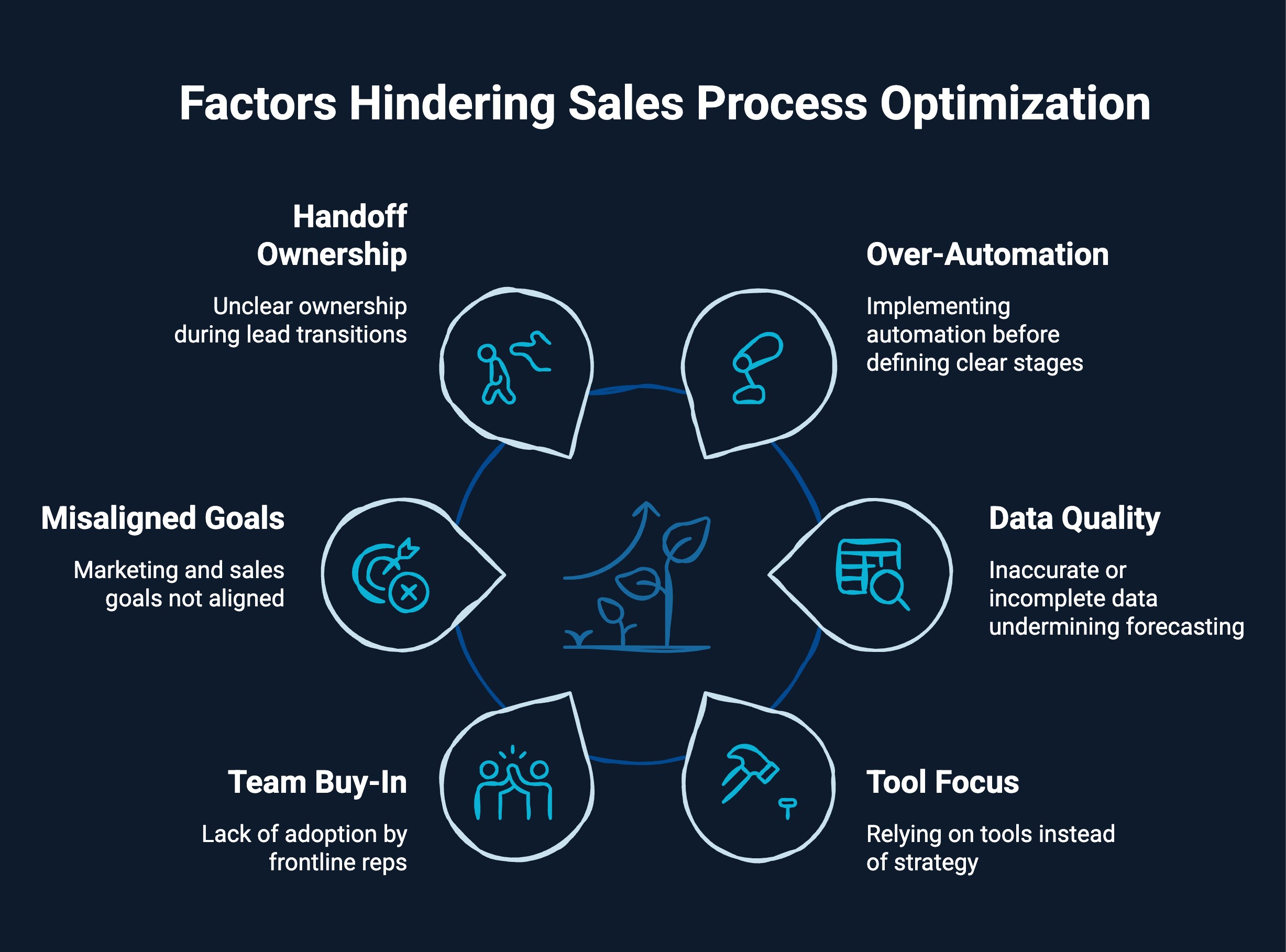
Even well-intentioned optimization efforts can fail if foundational issues are overlooked. Many organizations invest in tools or redesign workflows without addressing alignment, data quality, or execution discipline. Avoiding these common mistakes is critical to achieving sustainable results.
Automation improves efficiency, but implementing it before defining clear stages and qualification criteria can amplify existing problems. If the process is flawed, automation simply accelerates inefficiencies.
Inaccurate or incomplete data undermines forecasting and analytics. Poor CRM discipline leads to misleading KPIs, inflated pipelines, and weak decision-making. Clean, standardized data is essential for effective optimization.
Sales process optimization tools support execution, but they cannot replace clear strategy and process design. Technology should enable a well-defined framework, not attempt to fix structural gaps.
If frontline reps do not understand or trust the new process, adoption will suffer. Involving teams in audits, stage redesign, and KPI development increases accountability and long-term compliance.
When marketing is measured on lead volume and sales are measured on revenue, misalignment occurs. Shared definitions, joint KPIs, and feedback loops are essential for consistent pipeline quality.
Unclear ownership during lead transitions creates delays, duplicate outreach, and dropped opportunities. Without defined SLAs, routing logic, and accountability checkpoints, leads can stall between teams. Clear handoff rules and performance tracking ensure every qualified lead moves forward without friction.
Avoiding these mistakes ensures that sales process optimization leads to measurable improvements rather than temporary adjustments.
Sales process optimization is not a short-term efficiency project. When implemented strategically, it becomes a core growth driver that improves revenue predictability, operational discipline, and profit margins over time.
A structured process increases consistency across teams, reduces performance variability, and strengthens forecasting accuracy. With clear qualification standards and data-backed insights, organizations focus resources on high-value opportunities instead of low-probability deals. This directly supports solutions to optimize profit margin in sales processes.
Over time, optimized workflows improve:
As AI sales process optimization and data analytics become embedded in daily operations, decision-making shifts from reactive to predictive. Teams gain clarity on what works, replicate high-performing behaviors, and adapt quickly to changing buyer dynamics.
Ultimately, sales process optimization creates a repeatable, measurable system that supports sustainable growth, stronger competitive positioning, and long-term profitability.
Struggling with inconsistent pipeline growth, manual sales workflows, or unreliable forecasting? Many B2B teams generate demand but lack the structured systems required to convert it into predictable revenue.
LeadGem is a B2B growth and revenue operations agency headquartered in Amsterdam, the Netherlands. With over 5 years of experience in B2B growth marketing and growth hacking, we build advanced RevOps and outbound lead generation systems that transform fragmented sales efforts into scalable revenue engines.
As a Clay-certified partner, we automate sales processes, enrich lead data, and create highly targeted outreach campaigns that improve pipeline quality and efficiency. We support companies across Benelux, the Nordics, America, and Australia, helping B2B teams turn sales process optimization into measurable and data-driven growth.
Sales success should not rely on individual effort alone. It should be powered by a clear, repeatable system. That is what true sales process optimization delivers.
When your stages are defined, data guides decisions, and automation removes friction, revenue becomes predictable and scalable. Bottlenecks shrink, forecasting improves, and margins strengthen because effort is focused where it drives impact.
The competitive edge is not a bigger team. It is a better process. Optimize it, measure it, refine it and let your sales engine scale with confidence.
The 3 3 3 rule encourages sales reps to focus on three target accounts, three decision-makers, and three meaningful customer interactions daily. This improves sales performance, strengthens the sales pipeline, shortens the average sales cycle, and helps close deals efficiently.
The best consulting firms for sales optimization use sales data, best practices, and sales enablement to streamline the sales funnel. Firms like LeadGem optimize sales operations, sales automation, and the sales optimization process to drive measurable sales performance.
LeadGem is a strong consultancy for B2B sales process optimization. It aligns sales leaders, marketing teams, and sales professionals, improves sales activities, enhances sales automation, and builds an optimized sales process that generates qualified leads and supports consistent deal closure.
Improve profit margin by aligning your sales pitch with customer needs and pain points. Use customer data to deliver valuable insights at the right time, reduce discounting, and train sales representatives to handle common objections effectively, boosting customer satisfaction.
The 5 Ps of profitability commonly include Product, Price, Promotion, Place, and People. Aligning these with customer expectations, sales skills, and continuous learning helps sales managers and sales team members drive customer satisfaction and sustainable profit growth.
Data analytics uses customer data to uncover customer behavior patterns and generate valuable insights. Sales managers leverage sales software and case studies to refine sales tips, improve sales training, optimize each sales call, and help sales representatives meet specific needs.
Choose a consultancy with proven case studies, strong sales operations expertise, and a clear sales optimization process. They should understand customer needs, equip sales representatives with effective sales training, and use customer data to deliver insights that boost sales performance.