

Contact


Revenue growth does not stall because teams lack effort. It stalls because they lack alignment. According to Forrester, organizations that align sales, marketing, and operations through RevOps achieve up to 36% higher revenue growth and 28% greater profitability than siloed companies.
This misalignment appears as unreliable pipeline numbers, disconnected tools, unclear ownership, and longer sales cycles. Whether you are evaluating a b2b RevOps consulting firm or searching for a RevOps consultant SaaS teams rely on, the core issue remains the same. Disconnected revenue systems limit predictable growth.
This blog breaks down exactly how RevOps consulting works, when to hire a RevOps consulting agency, and how industry-specific approaches, from healthcare to manufacturing, turn fragmented operations into a scalable revenue engine.
RevOps consulting aligns marketing, sales teams, and customer success under one unified revenue strategy. Instead of optimizing teams separately, a revops consultant improves the entire revenue system, including processes, CRM structure, data quality, forecasting, and reporting. The focus is on predictable, scalable growth.
A RevOps consulting agency typically audits your funnel, tools, and lifecycle stages, then fixes gaps in handoffs, automation, and attribution. For growing B2B companies, a structured approach from a b2b revops consultancy ensures clean data, accurate pipeline visibility, and reliable forecasting.
This approach also applies to RevOps consulting for finance, where compliance, reporting precision, and audit-readiness are essential.
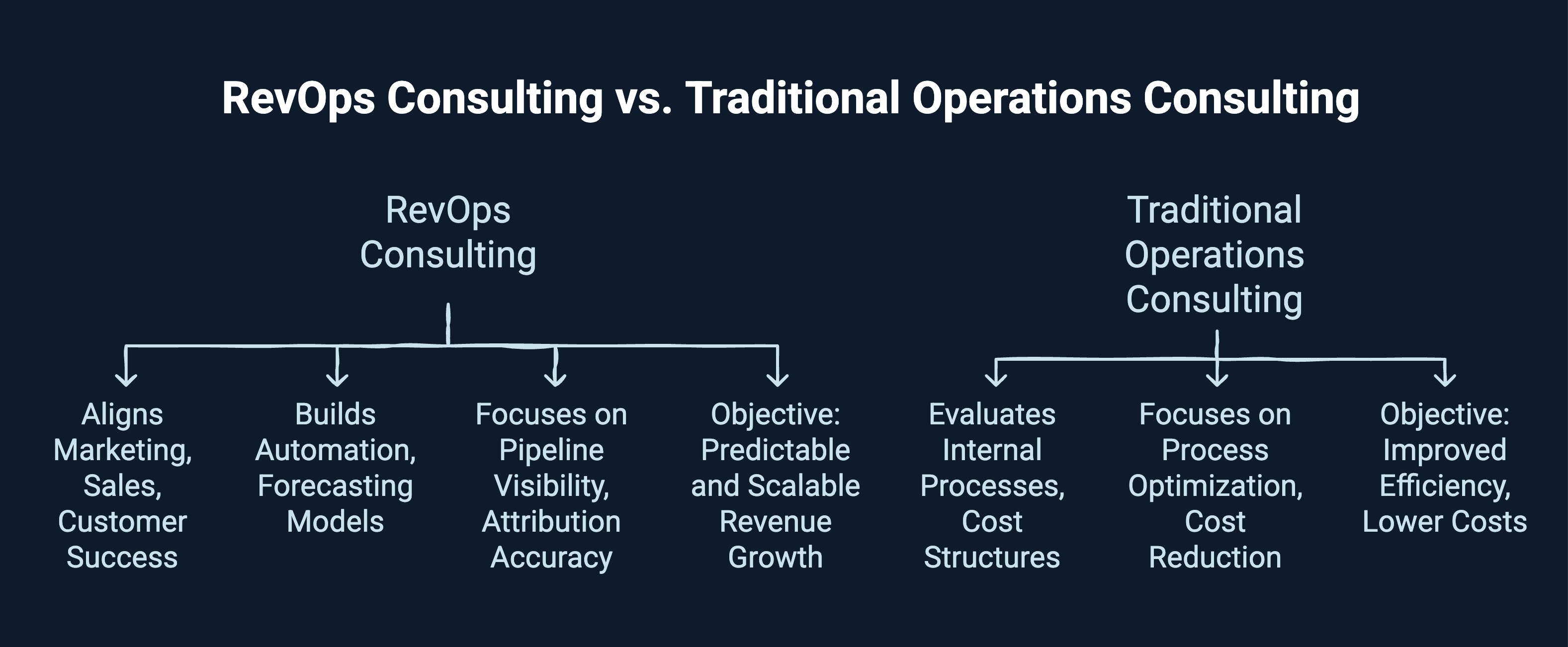
RevOps consulting and traditional operations consulting both improve business performance, but they focus on different outcomes and organizational priorities.
RevOps consulting is revenue-centred. It aligns marketing, sales, and customer success through unified systems, structured lifecycle frameworks, and measurable reporting.
Consultants work directly inside platforms such as HubSpot and Salesforce to build automation, forecasting models, and revenue dashboards.
It typically focuses on:
The objective is predictable and scalable revenue growth.
Traditional operations consulting is efficiency-centered. It evaluates internal processes, cost structures, and operational workflows across the organization.
It commonly focuses on:
The objective is improved efficiency, lower operational costs, and stronger margins.
In short, RevOps consulting strengthens the revenue engine. Traditional operations consulting improves overall operational performance.
Want to understand which tools actually power high-performing revenue teams? Explore our guide to building the right RevOps tech stack to support scalable growth.
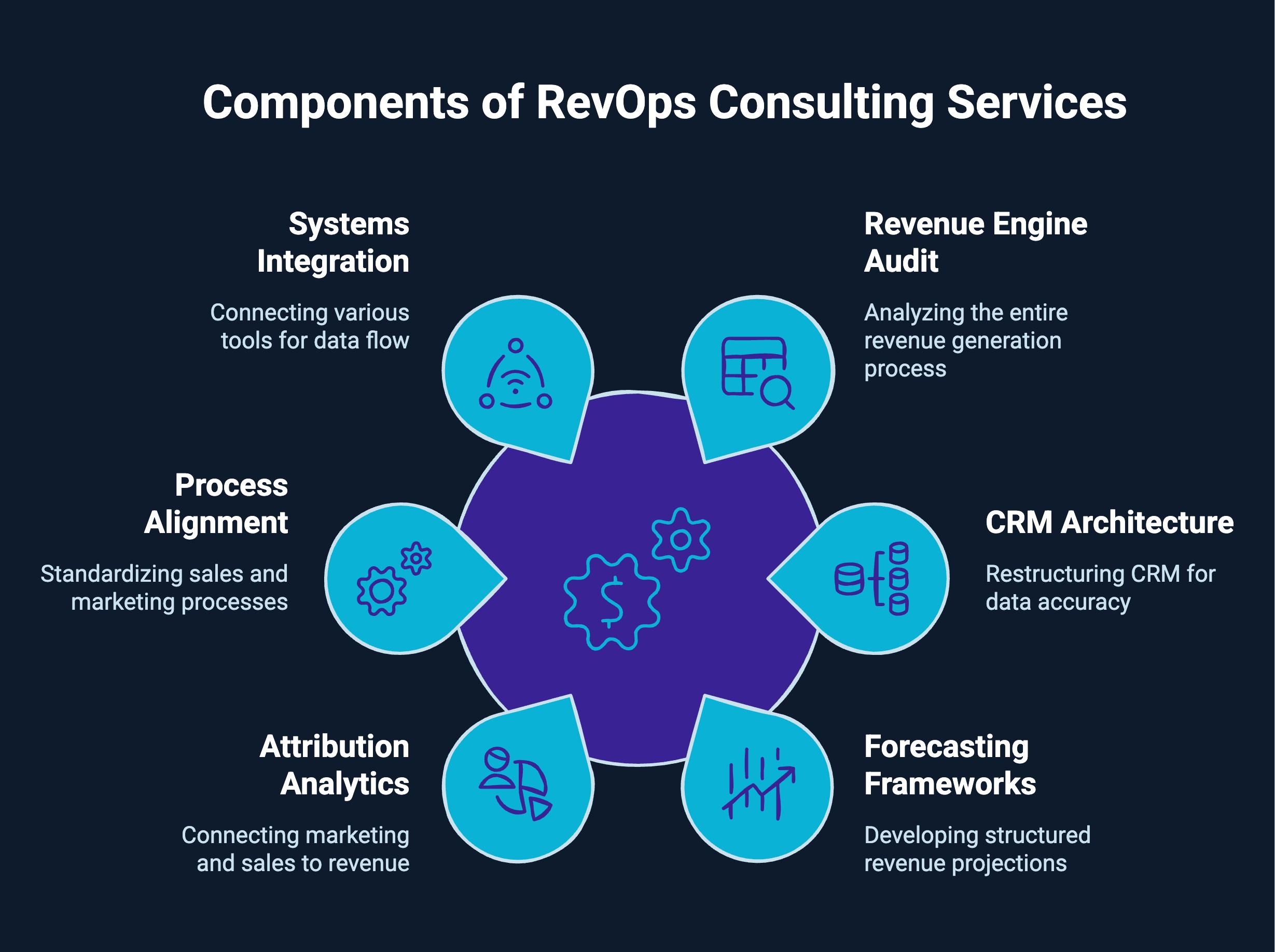
RevOps consulting focuses on building a scalable revenue system, not just optimizing isolated tasks. A strong RevOps consulting agency evaluates how revenue is generated, tracked, forecasted, and scaled across the full customer lifecycle, then restructures the underlying infrastructure.
These services are adapted across industries, including healthcare, RevOps consulting, and engagements led by a manufacturing RevOps consultant working within ERP-driven environments.
Core services typically include:
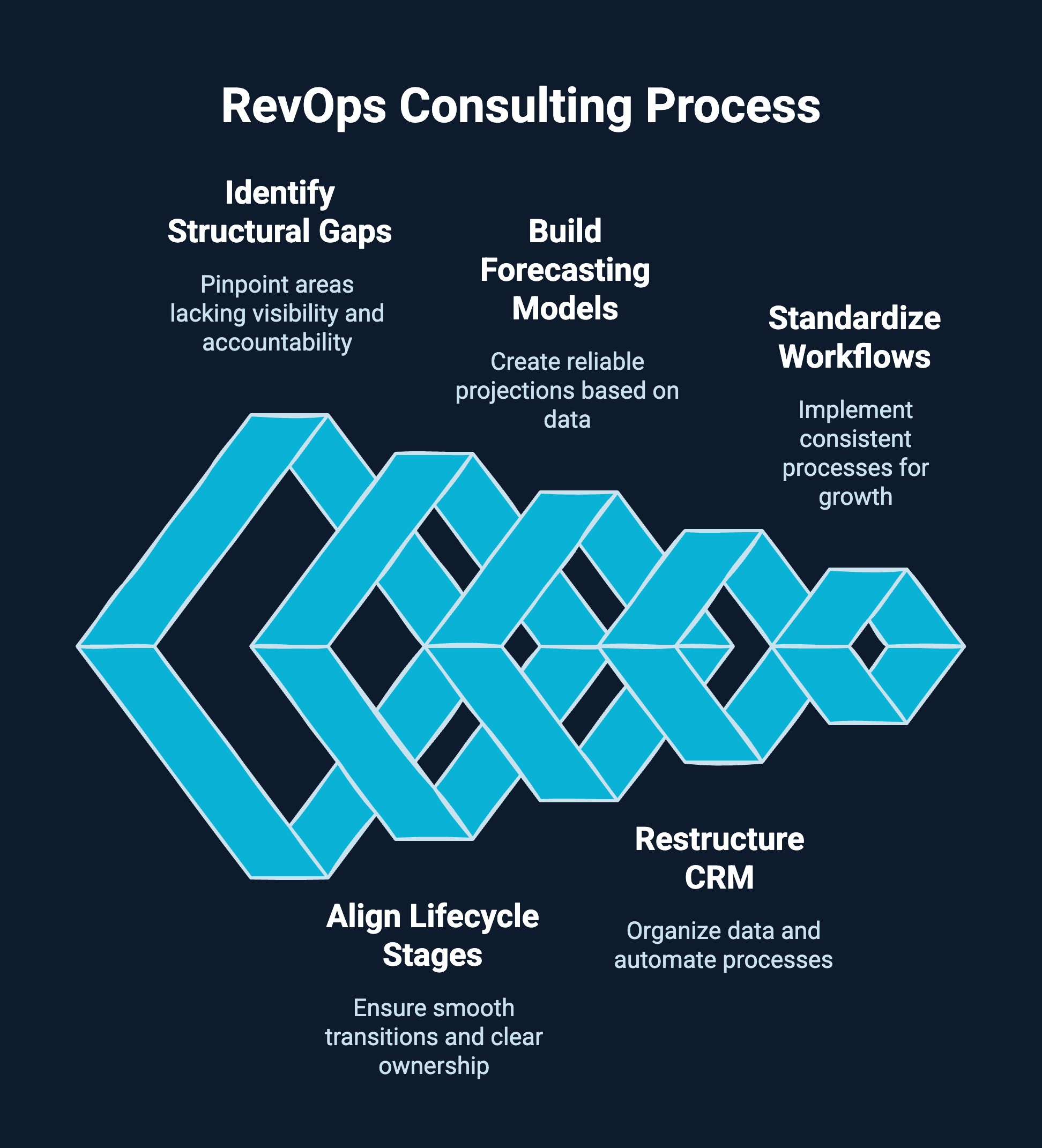
Companies turn to RevOps consulting when growth becomes inconsistent, forecasts miss targets, or scaling creates operational friction. A RevOps consulting agency identifies structural gaps that limit visibility, accountability, and predictable revenue.
This is particularly common among fast-scaling software firms working with a revops consultant that tech companies rely on to manage complex enterprise pipelines and multi-stakeholder buying processes.
Common triggers include:
When operational complexity outpaces structure, RevOps consulting restores clarity and scalability.
Ready to streamline workflows and eliminate manual bottlenecks? Read our full guide to RevOps automation and unlock more efficiency.
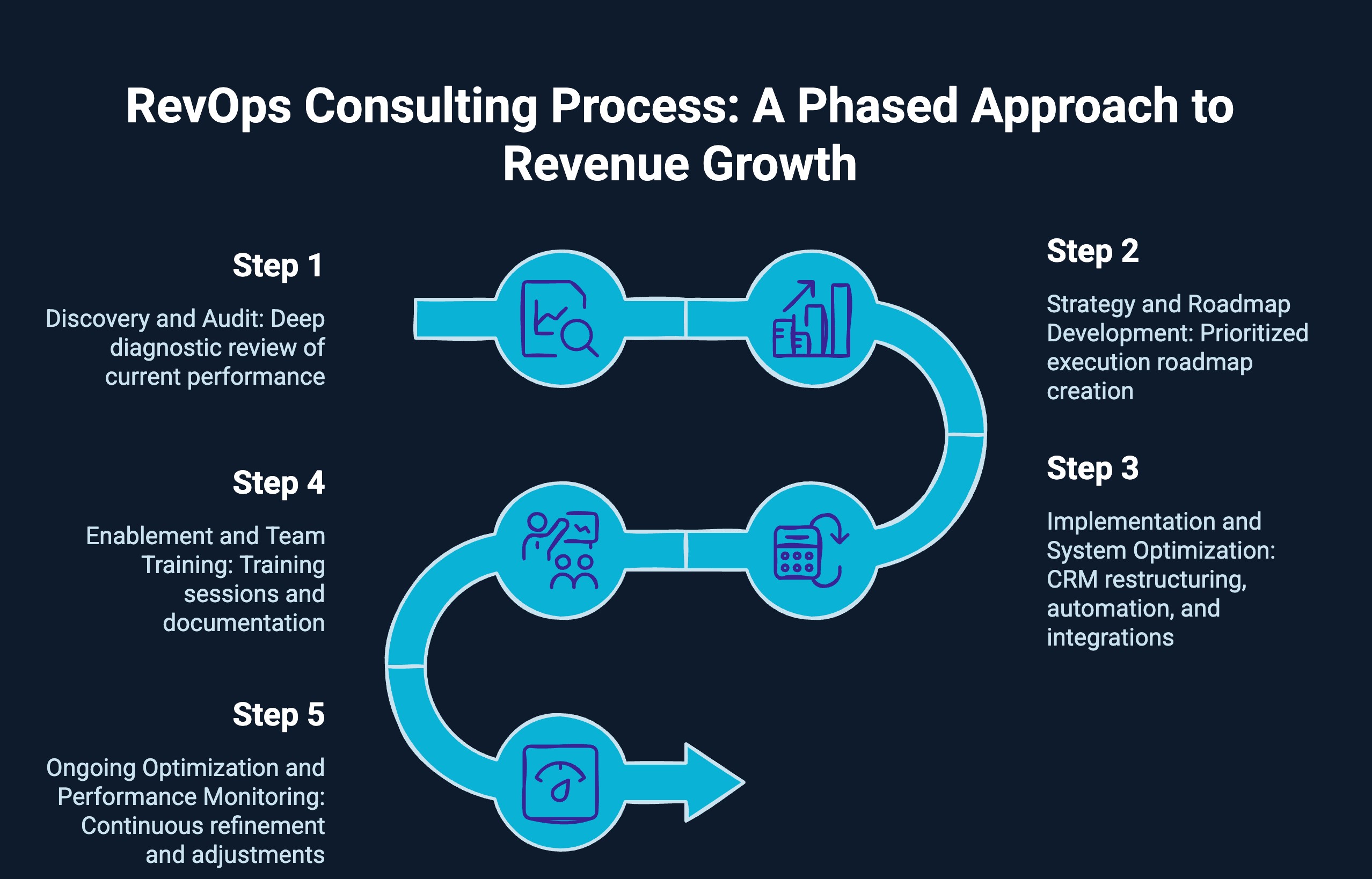
RevOps consulting follows a structured, phased approach. The objective is not just to recommend improvements, but to design, implement, and operationalize a scalable revenue system.
The engagement begins with a deep diagnostic review. A RevOps consulting agency evaluates your funnel performance, CRM structure, lifecycle stages, reporting accuracy, automation logic, and team alignment.
This phase identifies revenue leakage, data inconsistencies, forecasting gaps, and process breakdowns. The outcome is a clear baseline of current performance and operational risks.
Based on audit findings, consultants build a prioritized execution roadmap. This includes defining lifecycle frameworks, pipeline restructuring plans, forecasting models, attribution methodology, automation upgrades, and integration requirements.
The roadmap aligns revenue goals with operational milestones and establishes measurable success metrics.
This is where strategy turns into execution. CRM architecture is restructured, automation workflows are built, dashboards are configured, and integrations are deployed to create a scalable revenue system.
Across SaaS, finance, healthcare, and manufacturing, this phase ensures systems are technically sound and aligned with revenue goals. Data flows are standardized, lifecycle stages are defined, and forecasting frameworks are operationalized.
This is also where execution-focused partners like LeadGem stand out. Instead of stopping at recommendations, they implement CRM restructuring, automation, outbound systems, dashboards, and lifecycle processes that directly improve pipeline generation and revenue predictability.
Systems alone do not drive performance. Teams must understand new processes and accountability standards. RevOps consultants conduct training sessions, document workflows, define ownership rules, and ensure marketing, sales, and customer success operate within the new framework consistently.
Revenue systems require continuous refinement. Post-implementation, performance metrics are monitored to identify bottlenecks, forecast deviations, and conversion gaps.
Adjustments are made to lifecycle definitions, automation rules, or forecasting models to maintain long-term scalability and predictable growth.
If your business is scaling, explore our guide to finding the best RevOps agency for mid-sized companies to support predictable growth.
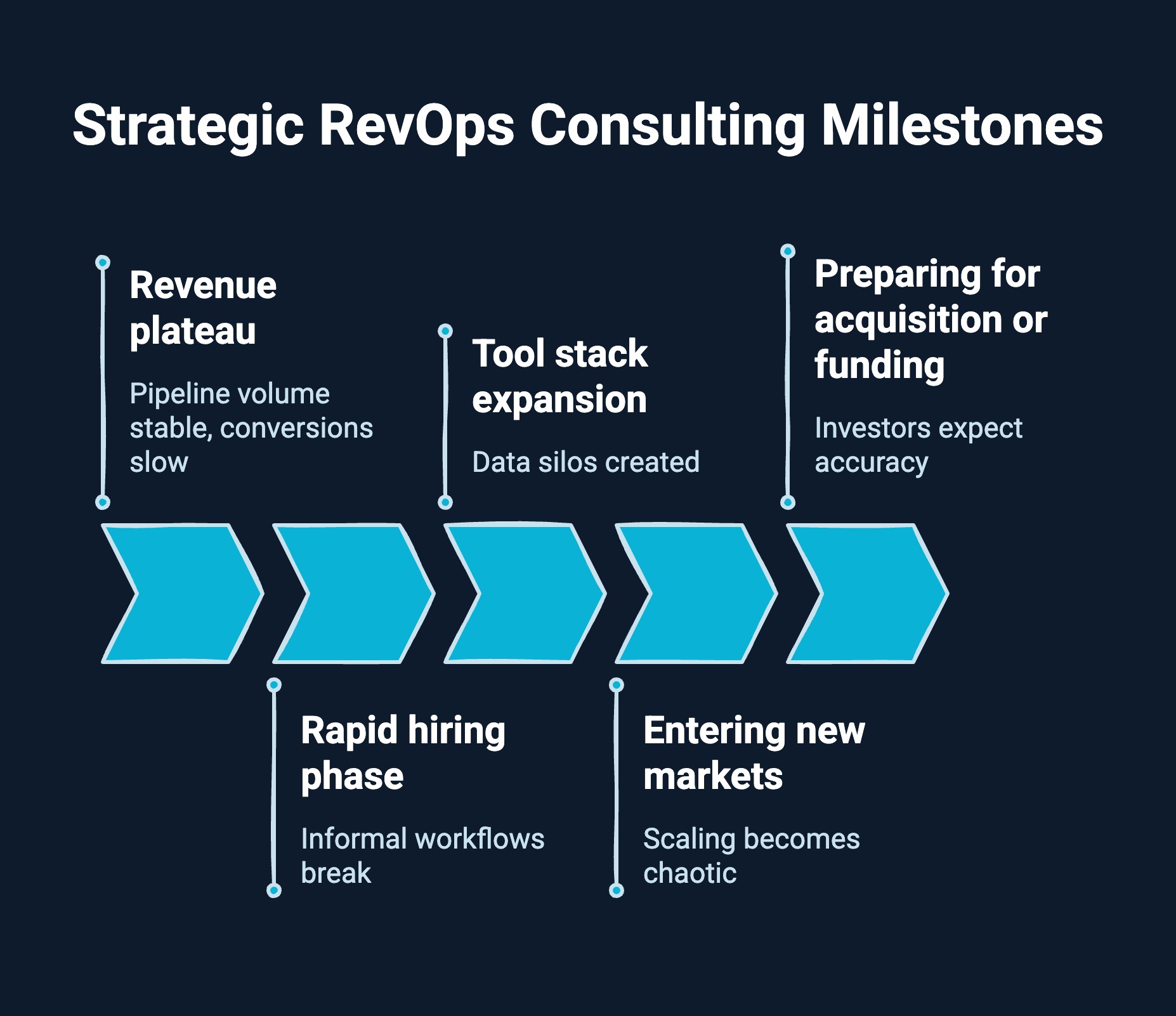
RevOps consulting becomes critical at growth inflection points. When revenue complexity increases faster than operational structure, inefficiencies multiply. Investing at the right moment prevents small gaps from becoming systemic performance issues.
Common triggers include:
If growth is accelerating but visibility is declining, it is usually the right time to consider RevOps consulting.
Not sure how RevOps and Sales Ops compare? Explore our guide to RevOps vs Sales Ops for a clear understanding of each function’s impact.
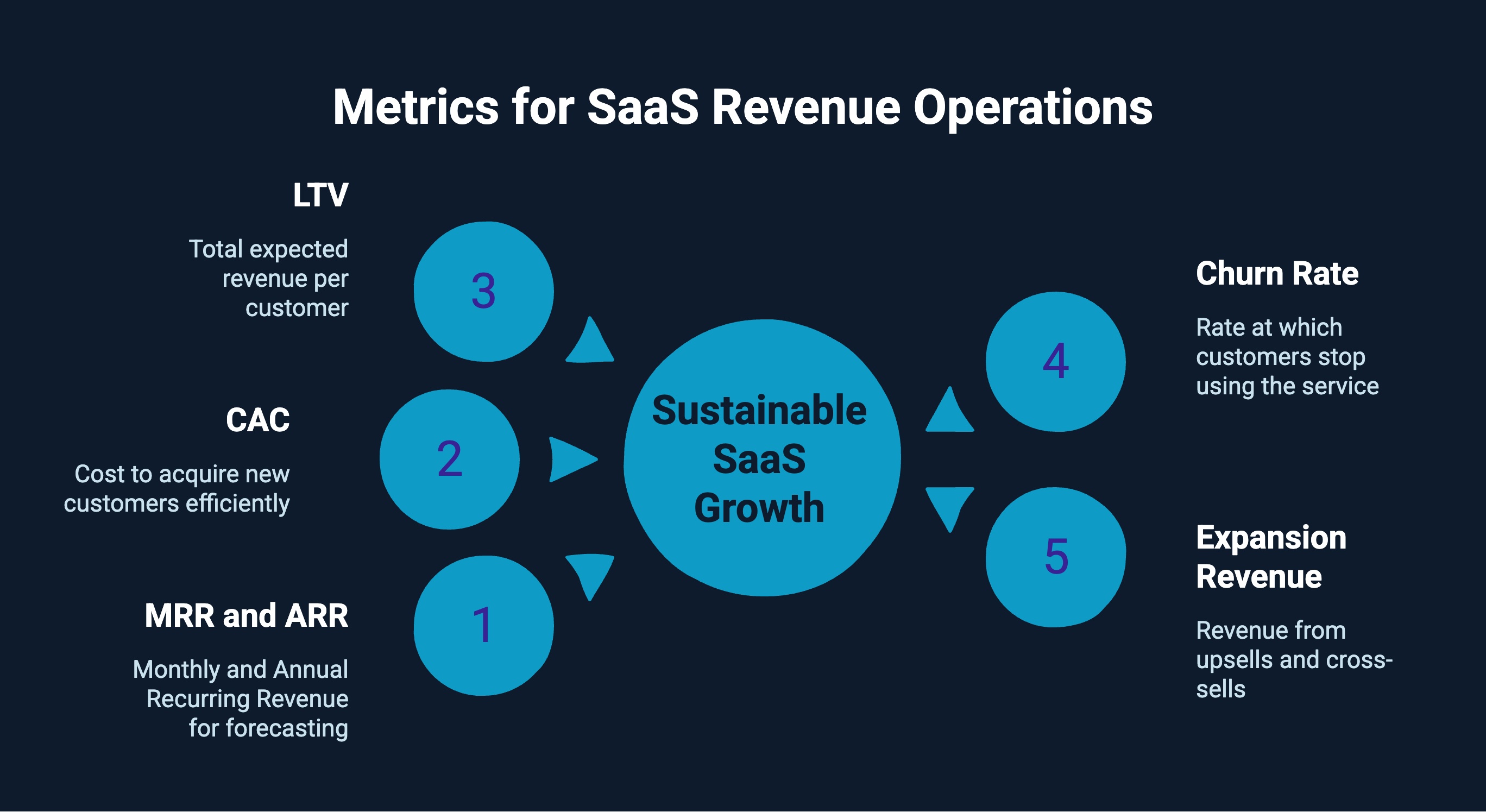
In SaaS, revenue quality matters more than raw growth. A RevOps consultant saas companies focuses on metrics that determine sustainability, efficiency, and long-term valuation. Without structured tracking and clean attribution, these numbers quickly lose reliability.
Key metrics include:
Together, these metrics create a clear picture of SaaS performance. RevOps consulting ensures they are not only tracked but structured in a way that leadership can trust for forecasting and strategic decision-making.
Want practical steps for executing your revenue operations strategy? Check out our comprehensive RevOps implementation guide.
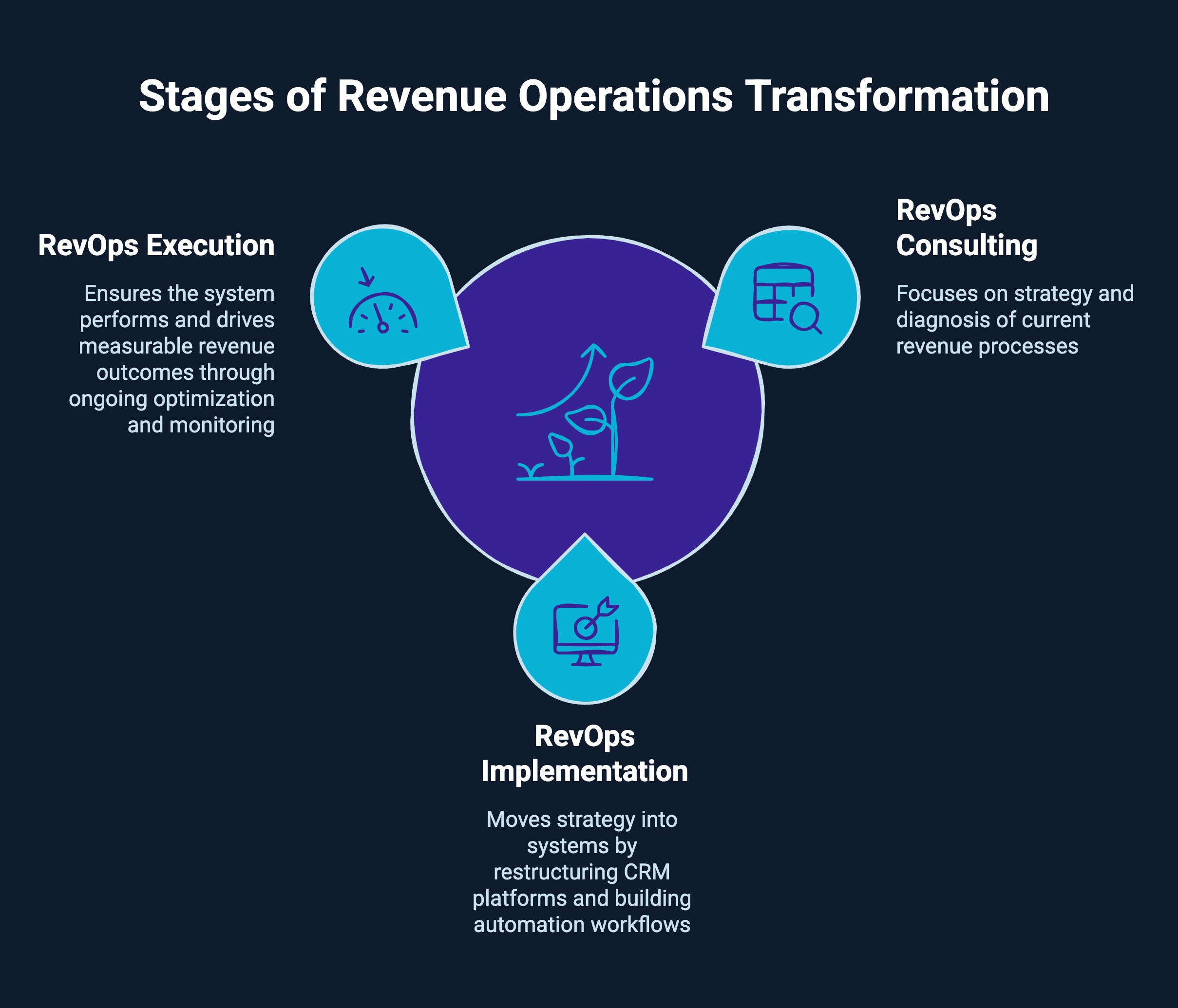
These three terms are often used interchangeably, but they represent distinct stages of revenue transformation. Understanding the difference helps companies choose the right type of partner.
RevOps consulting focuses on strategy and diagnosis. Consultants audit your current revenue processes, evaluate CRM architecture, identify funnel gaps, and design a structured roadmap for improvement.
This stage typically includes:
The outcome is clarity and direction, but not necessarily system-level change.
RevOps implementation moves strategy into systems. This involves restructuring CRM platforms such as HubSpot or Salesforce, building automation workflows, configuring dashboards, and integrating tools.
This stage typically includes:
The outcome is a technically functional revenue infrastructure.
RevOps execution goes beyond setup. It ensures the system performs and drives measurable revenue outcomes. Execution includes ongoing optimization, performance monitoring, GTM alignment, outbound system refinement, and continuous forecasting accuracy improvement.
This stage typically includes:
The outcome is predictable, scalable revenue growth.
Many firms specialize in only one of these areas. Some focus purely on strategy. Others handle technical setup but stop after deployment.
Execution-focused partners like LeadGem cover all three. They design the strategy, implement it inside revenue systems, and continuously optimize performance to ensure revenue impact.
True RevOps transformation requires consulting, implementation, and execution working together.
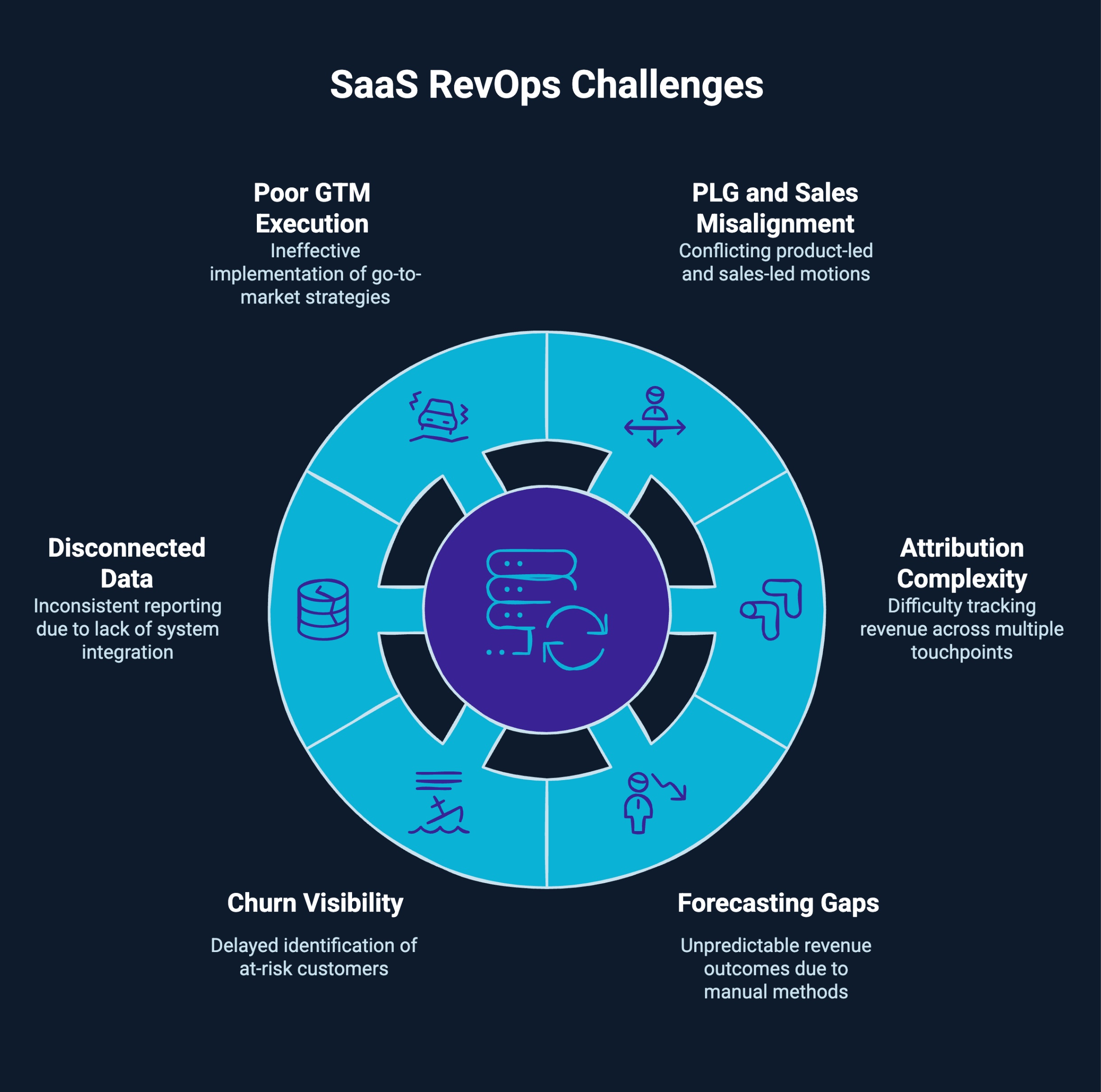
SaaS revenue models are dynamic. Growth depends on acquisition, retention, expansion, and accurate forecasting working together. When systems and teams are not aligned, small inefficiencies quickly compound. A RevOps consultant saas companies typically address the following structural challenges.
Hybrid SaaS models often combine product-led growth with outbound or enterprise sales. Without unified lifecycle definitions, product-qualified leads and sales-qualified opportunities overlap or conflict. Attribution becomes unclear, and expanded ownership is disputed.
RevOps consulting creates a shared lifecycle framework that clearly defines qualification thresholds, routing logic, and reporting standards. It aligns product usage data with sales processes so both motions operate within one measurable system.
SaaS buyers interact with multiple channels before converting. Ads, content, demos, free trials, and sales conversations all influence revenue. Without structured attribution, marketing ROI becomes unclear, and budget allocation lacks precision.
RevOps establishes multi-touch attribution models integrated across CRM, marketing automation, and analytics platforms. This connects engagement activity to closed revenue, enabling leadership to evaluate performance accurately.
Forecasting must account for new deals, renewals, churn, downgrades, and expansion revenue. Many SaaS companies rely on manual spreadsheets or subjective pipeline estimates, leading to unpredictable outcomes.
RevOps implements weighted pipeline forecasting, renewal tracking systems, and cohort-based revenue modeling. Billing data and CRM records are synchronized to create real-time revenue visibility and more reliable projections.
Churn risk often goes unnoticed until renewal dates approach. Without early indicators tied to product usage, engagement signals, or support interactions, retention efforts become reactive.
RevOps integrates product analytics into CRM dashboards, builds customer health scoring models, and automates alerts for at-risk accounts. This enables proactive intervention before revenue is lost.
SaaS organizations commonly operate across CRM, billing systems, marketing automation, and product analytics platforms that do not communicate seamlessly. This creates reporting inconsistencies and undermines data confidence.
Many SaaS companies have clear go-to-market strategies but struggle with execution. Lifecycle stages are not implemented correctly. Automation is partially configured. Sales handoffs break down. Dashboards do not reflect real performance.
Execution-focused RevOps partners such as LeadGem address this gap by operationalizing strategy directly inside revenue systems. They restructure CRM architecture, build automation workflows, align cross-functional processes, and continuously optimize performance.
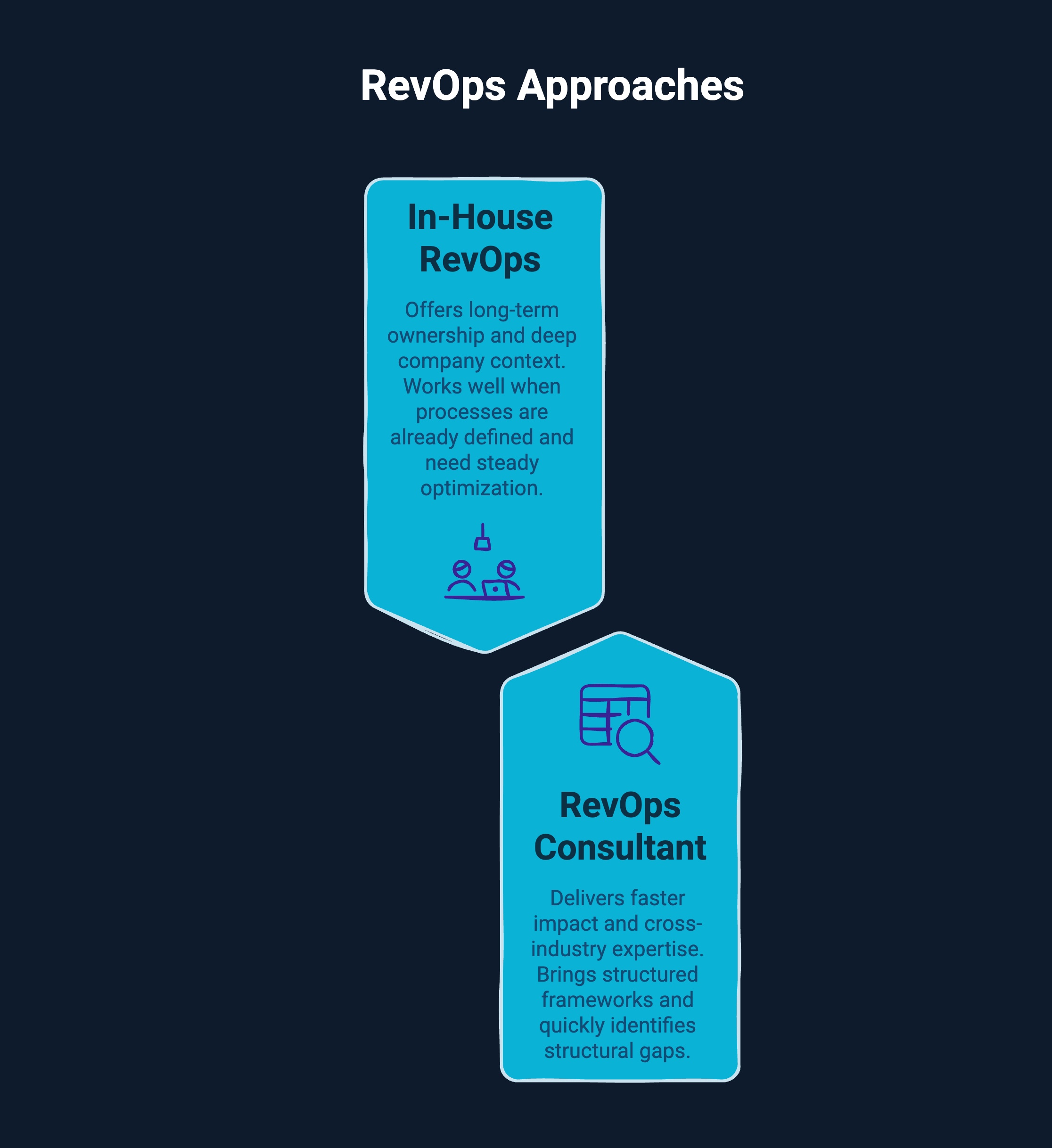
Deciding between building internally or partnering with a RevOps consulting agency depends on speed, expertise, and growth stage.
An in-house RevOps team offers long-term ownership and deep company context. It works well when processes are already defined and need steady optimization. However, hiring senior talent across CRM, analytics, and forecasting can be expensive and time-consuming.
In-house is ideal when:
A RevOps consultant or b2b revops consulting firm delivers faster impact and cross-industry expertise. They bring structured frameworks and quickly identify structural gaps.
Consulting is best when:
Many companies adopt a hybrid approach. A consultant builds the foundation, and internal teams manage ongoing optimization.
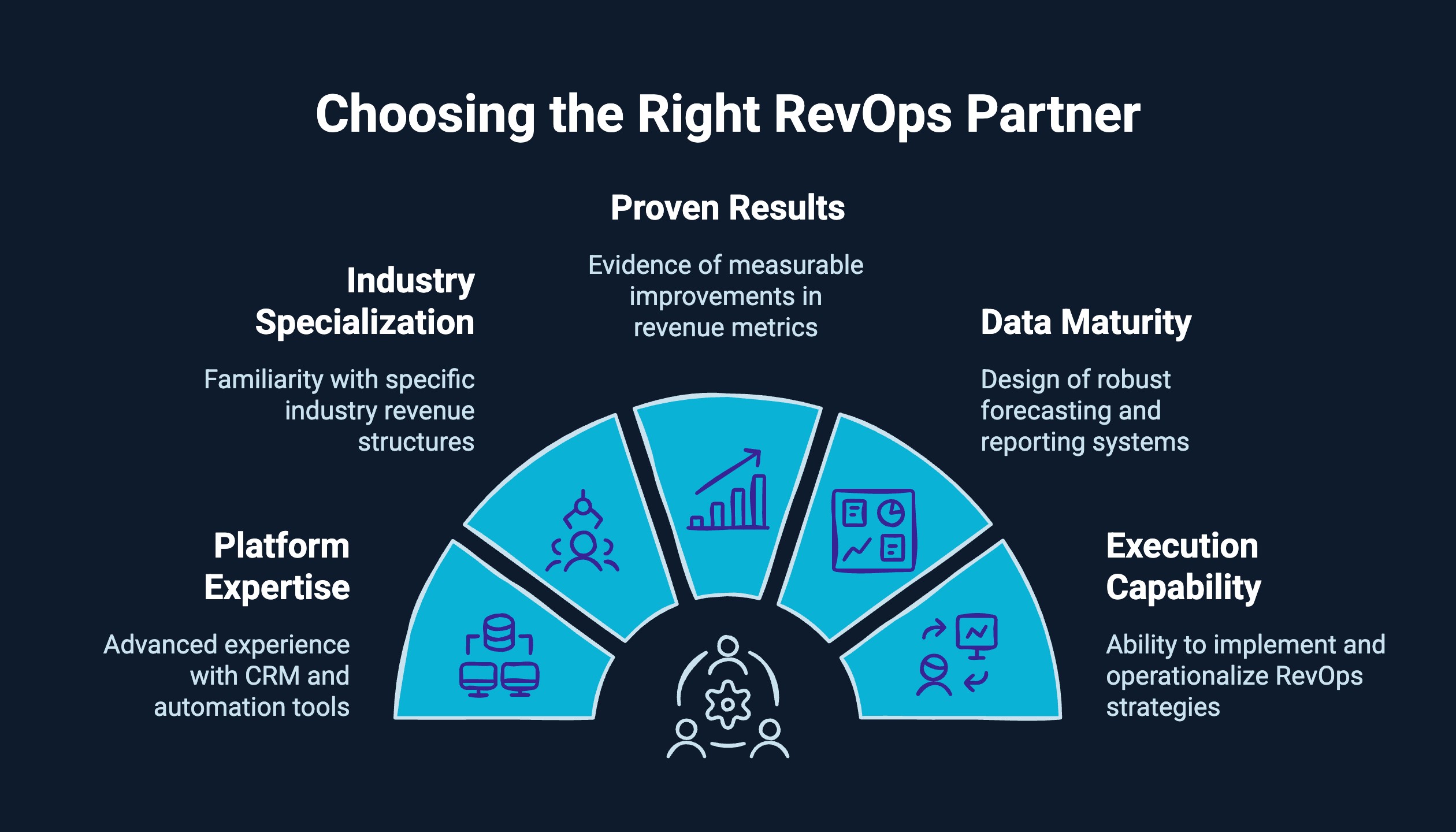
Choosing the right RevOps consulting partner determines whether you build a scalable revenue engine or implement short-term fixes. The ideal partner combines technical depth, industry understanding, measurable results, and strong execution capability.
A strong RevOps partner must have advanced experience with platforms like HubSpot and Salesforce, along with your broader tech stack.
They should understand automation architecture, lifecycle design, integrations, and reporting frameworks. Without system-level expertise, even the best strategy cannot be translated into operational performance.
Revenue structures vary across industries. SaaS businesses rely on subscription forecasting and churn visibility. Finance requires compliance-aware reporting.
Healthcare demands secure workflows. Manufacturing often needs ERP and CRM alignment. A partner familiar with your industry can design RevOps processes that reflect your commercial model instead of applying generic best practices.
Credible RevOps consulting firms demonstrate measurable impact. Look for evidence of improved conversion rates, more accurate forecasting, faster pipeline movement, or higher retention.
Real transformation is reflected in performance metrics, not just strategic recommendations or presentations.
RevOps is driven by structured revenue intelligence. Your partner should design forecasting models, attribution systems, and executive dashboards that leadership can rely on.
Clear visibility into funnel performance and revenue metrics ensures confident, data-backed decision-making.
Execution is the most important differentiator. Strategy-only firms typically conduct audits and provide recommendations, leaving implementation to internal teams.
Execution-focused partners such as LeadGem go further by restructuring CRM systems, building automation workflows, configuring dashboards, and operationalizing processes across teams.
RevOps transformation requires implementation, not just planning. The right partner ensures strategy is embedded directly into your systems and revenue operations.
Struggling with sales and marketing alignment? Explore our guide to the best marketing agency for sales enablement to maximize collaboration and revenue impact.

RevOps consulting is not about incremental tweaks. It is designed to create measurable improvements across your entire revenue engine. When implemented correctly, the impact is visible in performance metrics, reporting clarity, and operational efficiency.
Common outcomes include:
For companies working with a RevOps consulting agency, the ultimate result is predictable, scalable revenue growth supported by systems leadership that can be trusted.
Unlike traditional consulting firms that deliver strategy recommendations, LeadGem connects tooling, processes, and GTM execution. We design, implement, and operationalize RevOps infrastructure that directly improves pipeline generation, forecasting accuracy, and revenue scalability.
If you want RevOps that drives measurable pipeline growth, LeadGem delivers. Headquartered in Amsterdam, the Netherlands, LeadGem is a B2B growth and revenue operations agency with 5+ years of experience building scalable RevOps and outbound systems for modern B2B companies.
Why LeadGem stands out:
If you are looking for a RevOps consulting agency that combines growth expertise with hands-on execution, LeadGem builds revenue infrastructure designed for scale and predictable growth.
Growth without structure eventually breaks. The companies that scale confidently do not rely on effort alone. They rely on aligned systems, clean data, and clear accountability.
RevOps consulting turns scattered activity into a connected revenue engine. It replaces guesswork with visibility and reactive decisions with measurable control.
If your growth feels harder than it should, the issue is rarely demand. It is structure. Build the system, and revenue follows.
A RevOps consultant aligns sales operations, marketing efforts, and customer service departments through revenue operations consulting. They improve the customer journey, optimize business processes, implement marketing automation platforms, and use data analytics to drive revenue growth and sustainable growth.
A B2B consulting firm provides strategic guidance to improve revenue generation and business growth. They support revenue strategy development, demand generation, customer relationship management, and process optimization to help companies achieve business goals and sustainable revenue growth.
Yes, RevOps is in demand as companies prioritize seamless collaboration and scalable processes. Businesses adopt revenue operations strategies, data analytics, and technology implementation to drive revenue growth, improve customer experience, and support sustainable growth in competitive markets.
Yes, many top agencies specialize in B2B revenue operations consulting. With a team of skilled experts and a strong track record, they implement HubSpot CRM, revenue apps, and scalable processes to drive business growth and revenue operations excellence.
If forecasting feels unreliable, teams operate in silos, CRM data lacks credibility, or growth has plateaued, you likely need revops consulting. These gaps signal weak revenue operations strategies, limiting seamless collaboration, process optimization, and sustainable revenue growth.
The best agencies combine strategic guidance, strong data analytics, proven track record, and hands-on technology implementation. They deliver scalable processes, revenue strategy development, and measurable value creation solutions that consistently drive revenue growth and business growth.
Top agencies in 2026 specialize in B2B revenue operations consulting, HubSpot CRM implementation, demand generation, and scalable revenue operations strategies. Firms with robust reputations, skilled experts, and consistent results in sustainable growth lead the industry.